


The AI Disruption
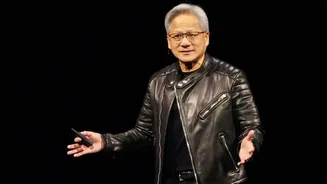
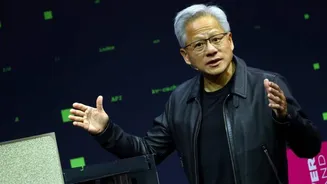
Nvidia's chief executive, Jensen Huang, has articulated a clear and perhaps unsettling vision regarding the pervasive influence of artificial intelligence
on the global workforce. During a recent engagement on the Lex Fridman podcast, Huang emphasized that roles predominantly defined by repetitive or routine tasks are exceptionally susceptible to being overtaken by AI systems. He stated unequivocally that if an individual's job essentially boils down to performing a specific set of tasks, then that role faces a high probability of significant disruption. This suggests a fundamental shift where the 'what' of work, meaning the specific actions performed, is becoming increasingly automatable, posing a direct challenge to traditional employment structures. The core of his message points towards a future where adaptability and a proactive stance towards technological integration will be paramount for professional survival and growth.
Embracing AI
Huang's outlook is not one of pure doom; instead, he strongly advocates for a proactive and adaptive approach to the integration of AI into professional life. He posits that if your career's primary value lies in the execution of certain tasks, then it is imperative to actively learn and implement AI to streamline and automate those very functions. He uses the hypothetical examples of a farmer or a pharmacist, suggesting that these professionals should not fear AI but rather explore its potential to enhance their capabilities. The goal, according to Huang, should be to leverage AI as a tool to elevate one's job, transforming it from a series of menial tasks into an opportunity for innovation and industry revolution. This perspective encourages individuals to view AI not as a replacement, but as a powerful collaborator that can unlock new levels of efficiency and creativity, thereby redefining their professional contributions.
Future-Proofing Careers
In light of the increasing anxieties surrounding job security in the face of advancing AI technologies, Jensen Huang offers direct counsel to those entering the workforce. He strongly advises every college student to graduate with a deep understanding and expertise in AI. This recommendation stems from his belief that AI is not just a trend but a foundational technology that will reshape industries. Huang also draws a crucial distinction between a job and the tasks that comprise it, explaining that while the tools and specific activities performed within a role may evolve considerably over time, the underlying purpose of the job often remains constant. This understanding is vital for individuals to adapt, as it suggests that career longevity is less about mastering a fixed set of tasks and more about understanding the broader objectives and how emerging technologies can help achieve them more effectively.
Roles Evolve, Not Vanish
Drawing from his extensive tenure as CEO of Nvidia, a position he has held for over three decades, Jensen Huang illustrates how roles transform rather than disappear entirely with technological advancements. He points out that the tools and methodologies he employs in his leadership capacity have continuously shifted throughout his career. This personal experience serves as a powerful testament to the adaptive nature of professional roles in response to technological innovation. He further elaborates on the example of radiology, a field that many initially predicted would be rendered obsolete by AI. However, this hasn't materialized because the role of a radiologist extends far beyond mere image analysis; it crucially involves complex decision-making, nuanced interpretation, and indispensable human judgment. This highlights that jobs requiring higher-order cognitive skills and human interaction are far more resilient to AI automation.