






Precision Drug Delivery Unveiled
A significant £1 million research initiative, spearheaded by the University of Sheffield, is pioneering a novel category of 'smart' drug delivery mechanisms.
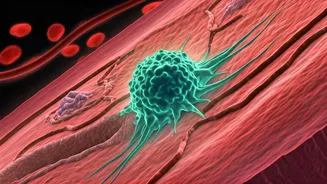
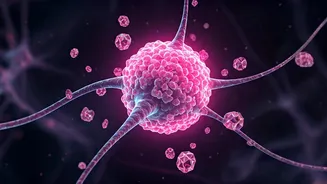
These advanced systems are engineered to precisely channel chemotherapy directly to surgical sites in glioblastoma patients, a particularly aggressive and rare form of brain cancer. Beyond oncology, this innovation opens up promising new avenues for managing severe inflammatory skin conditions and combating challenging fungal infections. The three-year project, generously funded by the Engineering and Physical Sciences Research Council (EPSRC) and led by esteemed Professors Rob Short and Nick Turner, unites Cold Atmospheric Plasma (CAP) technology with molecular imprinting techniques to achieve highly targeted therapeutic interventions for glioblastoma, autoimmune diseases, and invasive fungal pathogens. While the use of CAP in conjunction with medications is a recent scientific advancement, a crucial obstacle has been effectively integrating the plasma and the drug at the precise location for localized, on-demand treatment, a challenge this new project aims to overcome.
Transformative Treatment Potential
Professor Rob Short articulates the profound potential of this technology, suggesting it could reshape disease treatment paradigms much like lasers did, but with a key difference: CAP's transformative power lies in its synergistic combination with pharmaceuticals. He emphasizes that their Molecularly Imprinted Polymer (MIP) technology serves as the crucial bridge, enabling the simultaneous application of CAP and drugs. This multidisciplinary endeavor also benefits from the collective expertise of Sheffield's Faculty of Health and School of Biosciences, ensuring that the materials developed are meticulously designed with future clinical applications in mind. The ultimate goal is to narrow the gap between fundamental scientific discovery and practical medical implementation, paving the way for novel, targeted therapies for some of the most intractable cancers and inflammatory disorders. Previous work by Professor Short's team involved drug-delivery hydrogels acting like sponges for specific water-based drug molecules, a limitation that has now been superseded by the MIP approach.
Growing Hydrogels Around Drugs
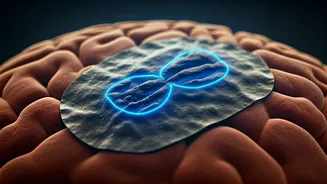
The innovative approach of this project revolves around Molecularly Imprinted Polymers (MIPs), moving beyond the constraints of earlier hydrogel-based systems. Instead of simply embedding a drug within an existing hydrogel structure, the researchers are effectively cultivating the hydrogel material directly around the target drug molecule. This process, as described by PTI, results in a new generation of 'smart' plasters meticulously crafted to house specific medications. By leveraging AI-driven modeling to simulate molecular interactions, the team can engineer bespoke cavities capable of encapsulating and releasing more complex drug compounds that were previously unsuitable for such delivery systems. This advancement broadens the scope of treatment formats considerably, even enabling the creation of implantable pellets for sustained drug release. For skin ailments, a portable CAP device, akin to an auto-injector, could be used to activate the plaster and trigger localized medicine release. In the context of glioblastoma, these pellets could be surgically implanted at the tumor site and subsequently activated via an endoscopic CAP device, facilitating precisely controlled, localized drug delivery.
Dual Benefits and Future Applications
The plasma generated by the system creates a beneficial 'cocktail' of reactive particles and electric fields, acting as an on-demand switch to release the embedded medication. Beyond its primary drug delivery function, researchers suggest this technology may offer secondary advantages, such as oxygenating tissues to accelerate healing processes. This dual functionality provides a novel solution for managing severe inflammatory skin diseases and presents a promising strategy for preventing dangerous post-surgical fungal infections, particularly in immunocompromised patients. The potential applications are vast, extending to a wider array of therapeutic challenges where localized and controlled drug administration is paramount, offering hope for more effective and less invasive treatments.