





The Unyielding Stone
For over a decade, NASA's Curiosity rover has bravely navigated the harsh Martian landscape, enduring frigid temperatures plummeting to -200°F (-129°C),
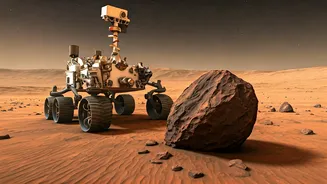
relentless dust storms, and intense radiation. Despite these environmental adversies, it was a relatively small, stubborn rock that unexpectedly brought its operations to a halt in April 2026. This particular rock, affectionately named "Atacama" by the mission engineers, proved exceptionally difficult to dislodge from the rover's drill bit, effectively immobilizing the sophisticated machinery for a significant period of six days. The incident underscored that even with advanced technology, unexpected terrestrial challenges can arise on extraterrestrial missions, demanding ingenious problem-solving from the ground control team.
Drilling for Discovery
On April 25, 2026, Curiosity embarked on a routine sampling mission, drilling into a rock designated "Atacama." The process involved using its rotary-percussive drill to extract a piece of the rock. The section removed measured approximately 1.5 feet in diameter at its base, with a thickness of about 6 inches, and weighed an estimated 28.6 pounds (13 kilograms). A peculiar aspect of this extraction was that the entire rock was lifted from the Martian surface when the sample was retracted by the rover's robotic arm. The subsequent objective was to process this rock into fine-grained material, which would then be analyzed by the rover's onboard instruments to determine its precise chemical and mineral composition, offering further insights into Mars' geological history.
A Six-Day Resolution
The engineers on Earth faced a considerable challenge in freeing Curiosity from its unexpected predicament with the "Atacama" rock. Initial attempts on April 25 involved simple vibration of the drill, but this yielded no success. By April 29, the team tried a different approach, rotating the robotic arm and then applying vibration, which managed to dislodge some sand but the rock remained firmly lodged. The breakthrough finally occurred on May 1. By tilting the drill bit further and simultaneously rotating it while applying vibration, "Atacama" finally broke apart and fell away from the drill. This successful maneuver allowed Curiosity to resume its crucial task of crushing rocks into powder for its advanced instruments, continuing its mission to map the planet's geological past despite this unusual interruption.