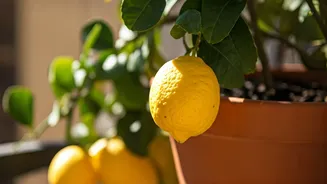

Choosing Your Tree
Selecting the right lemon tree is the first step toward a successful container garden. Consider factors like variety and size. Dwarf lemon varieties are
ideal because they are bred to stay compact, making them well-suited for container gardening and limited spaces like balconies. Popular choices include the 'Meyer' lemon, known for its sweetness and cold hardiness, and the 'Lisbon' lemon, a more traditional variety that is also relatively hardy. When you purchase your lemon tree, look for a healthy specimen with vibrant green leaves and no signs of pests or diseases. Avoid trees that appear root-bound in their pots, as this can hinder growth. Healthy root systems are essential to the plant's overall well-being and its ability to thrive in a container.
Potting & Soil
The right pot and soil are critical for container lemon tree cultivation. Select a pot that is large enough to accommodate the tree's root system, at least 15-20 gallons in volume for a mature tree. Ensure the pot has adequate drainage holes at the bottom to prevent waterlogging, which can lead to root rot. The material of the pot also matters; terracotta pots are porous and allow for good aeration, while plastic pots retain moisture longer. When it comes to soil, use a well-draining potting mix specifically designed for citrus trees. These mixes typically contain a blend of peat moss, perlite, and compost, providing good drainage, aeration, and essential nutrients. Avoid using garden soil directly, as it can compact easily and suffocate the roots. Adding a layer of gravel or broken pottery shards at the bottom of the pot can further improve drainage.
Watering Your Tree
Proper watering is essential to the health and productivity of your container lemon tree. Water deeply, but infrequently, allowing the soil to dry out slightly between waterings. Overwatering is a common mistake and can lead to root rot, while underwatering can cause stress and reduce fruit production. The frequency of watering depends on the climate, the size of the tree, and the type of pot. As a general rule, check the soil moisture by inserting your finger a couple of inches into the soil. If it feels dry, it's time to water. When you water, do it thoroughly until water drains from the bottom of the pot. During the growing season (spring and summer), lemon trees typically need more frequent watering, while in the dormant season (fall and winter), they require less. Monitor the leaves for signs of overwatering or underwatering, such as yellowing or wilting, and adjust your watering schedule accordingly.
Sunlight & Location
Lemon trees need plenty of sunlight to thrive and produce fruit. Aim to provide your tree with at least 6-8 hours of direct sunlight per day. A south-facing balcony or area that receives ample sunlight is ideal. If your balcony doesn't receive enough direct sunlight, consider using grow lights to supplement the natural light, particularly during the winter months. In warm climates, you can keep your lemon tree outdoors year-round. However, if you live in an area with cold winters, you'll need to protect your tree from freezing temperatures. Bring the container indoors or into a greenhouse when temperatures drop below freezing. Choose a sheltered location on your balcony, away from strong winds, which can damage the leaves and flowers. Consider the microclimate of your balcony, as some areas may be warmer or cooler than others. Rotating the pot periodically can help ensure all sides of the tree receive even sunlight exposure, promoting balanced growth and fruit production.
Fertilizing & Feeding
Regular fertilization is crucial for the health and productivity of your container lemon tree. Use a balanced citrus fertilizer formulated for container-grown plants. These fertilizers typically have a ratio of nutrients like nitrogen, phosphorus, and potassium, as well as essential micronutrients. Feed your lemon tree during the growing season (spring and summer), following the instructions on the fertilizer packaging. Over-fertilizing can be harmful, so it's important to stick to the recommended amounts. Avoid fertilizing during the dormant season (fall and winter), as the tree's growth slows down and it requires less nutrients. Apply fertilizer evenly around the base of the tree, avoiding direct contact with the trunk. Consider using slow-release fertilizers for a more consistent supply of nutrients or organic options such as compost tea or well-rotted manure, which can improve soil structure and provide additional nutrients. Supplementing with magnesium sulfate (Epsom salts) can also help prevent yellowing leaves and improve overall health.
Pruning & Shaping
Pruning helps maintain the shape and size of your lemon tree while also promoting fruit production. The best time to prune is in late winter or early spring, before new growth begins. Remove any dead, damaged, or crossing branches to improve air circulation and sunlight penetration. You can also thin out dense areas of the tree to encourage fruit production. When pruning, use sharp pruning shears or loppers to make clean cuts. Avoid leaving stubs, which can be susceptible to disease. The goal is to shape the tree, encourage new growth, and remove any branches that are obstructing sunlight or airflow. Consider the size and shape of your tree when pruning; don’t remove too much at once. Light pruning throughout the year can also be done to remove suckers (shoots growing from the base of the trunk) or to shape the tree as needed. If you want to encourage more fruit production, you may want to tip the ends of the branches after flowering, which can promote fruit set.
Pest & Disease Control
Container-grown lemon trees can be susceptible to pests and diseases. Common pests include aphids, spider mites, scale, and mealybugs. Regularly inspect your tree for any signs of infestation, such as small insects, webbing, or distorted leaves. Early detection is key to controlling pests. If you notice any pests, try washing them off with a strong spray of water. You can also use insecticidal soap or horticultural oil, following the manufacturer's instructions. For severe infestations, consult a local nursery or gardening expert for advice on more potent treatments. Common diseases include root rot, which is caused by overwatering, and citrus canker, which can cause lesions on the leaves and fruit. Prevent root rot by ensuring good drainage and avoiding overwatering. Remove any diseased leaves or fruit promptly to prevent the spread of the disease. Ensure good air circulation to reduce the risk of fungal diseases. Regularly clean up any fallen leaves or debris around the base of the tree.
Harvesting Lemons
Harvesting your own lemons is one of the most rewarding aspects of growing a lemon tree. The time it takes for lemons to ripen varies depending on the variety and climate. In general, lemons are ready to harvest when they reach their full size and develop a vibrant yellow color. However, some varieties may have a slight green tinge even when ripe. Gently squeeze the fruit to check for ripeness; ripe lemons will have a slight give. Use pruning shears or clippers to cut the fruit from the tree, leaving a small stem attached. Avoid pulling the fruit, which can damage the tree. Harvest lemons as needed, as they can be stored for several weeks in the refrigerator. Regularly harvesting lemons will also encourage the tree to produce more fruit. Enjoy your fresh, homegrown lemons in various recipes, from lemonade and desserts to savory dishes.