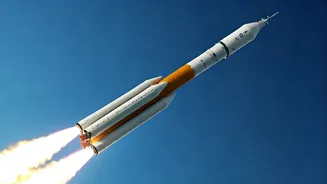







Understanding PSLV Failures
The Polar Satellite Launch Vehicle (PSLV) is a cornerstone of ISRO's space program, known for its reliability and versatility. However, recent missions
have encountered setbacks, raising critical questions. Two consecutive failures are a significant deviation from PSLV’s established track record, leading to concerns about the underlying causes. Understanding these failures requires a look into the vehicle's design, operational procedures, and the specific circumstances surrounding each mission's issues. The PSLV's modular design, incorporating solid and liquid stages, is intended to provide flexibility for various payloads and orbital requirements. However, the complexity of these systems introduces potential points of failure. Identifying the root causes of these failures is crucial, whether they stem from component malfunctions, software glitches, or human error in mission control. Any future success for ISRO will depend on a rigorous review and implementation of the changes needed to improve reliability.
Technical Investigations and Reviews
Following a mission failure, ISRO initiates thorough investigations involving teams of engineers and scientists to pinpoint the source of the problem. These investigations typically include detailed analysis of telemetry data, examination of recovered components, and simulations to recreate the failure scenarios. The aim is to reconstruct the sequence of events and identify the exact cause of failure. The findings of these investigations are often documented in detailed reports that are used to make corrective actions. ISRO can conduct extensive reviews of its processes, from manufacturing and testing to mission planning and execution. Corrective actions might involve design modifications, improvements in manufacturing processes, and updates to operational procedures. These steps are essential to ensure that future PSLV missions are more robust and reliable. Moreover, international collaboration on space programs includes the sharing of expertise and the incorporation of best practices from other space agencies to enhance their investigation processes.
Impact on ISRO's Reputation
A successful space program hinges on the reliability of its launch vehicles and the successful delivery of payloads into orbit. Repeated failures can erode public confidence and damage ISRO's reputation in the global space market. For ISRO, reliability is not only a technical necessity but also a crucial factor in building trust with customers, partners, and the public. Missions must function flawlessly if ISRO hopes to secure contracts and expand its commercial activities. The consequences of any failure can extend beyond the loss of payloads, potentially leading to financial losses, reputational damage, and a setback in technological advancements. To maintain its standing, ISRO must prioritize reliability and transparency. This includes transparently communicating the causes of failures and the measures being implemented to prevent future incidents. Such an approach demonstrates a commitment to excellence and reinforces ISRO's position as a reliable and competent space agency.
Strategic Implications & Adjustments
The setbacks in PSLV missions require a strategic reassessment within ISRO, influencing mission planning, technological development, and resource allocation. ISRO needs to review its launch cadence, giving priority to ensuring mission success over rapid deployment. This can involve reducing the frequency of launches to allow for more intensive testing and quality control. Investments in research and development can focus on enhancing the reliability and performance of existing launch vehicles and developing new technologies. This can include developing advanced propulsion systems, improving the robustness of onboard systems, and strengthening the overall reliability of the PSLV. A key element of ISRO's response is likely to be a greater emphasis on risk management, including the identification and mitigation of potential failure modes and strengthening quality control measures. These adjustments will be essential for restoring confidence in the PSLV and ensuring ISRO remains competitive in the global space market.
Future of Indian Space Program
The long-term impact of PSLV failures extends beyond immediate concerns, influencing the trajectory of India's space program, including its ambitions for future missions, such as crewed spaceflights, lunar missions, and deep-space exploration. The reliability of ISRO's launch vehicles is essential for achieving these goals. Therefore, the agency must resolve technical issues and build trust. Success in these missions will also support scientific advancements, technological innovation, and India's overall technological self-sufficiency. Sustained investment in space exploration can stimulate economic growth, create jobs, and foster scientific innovation. Strengthening ISRO's capabilities requires collaboration with international partners, leveraging their expertise, and sharing resources for mutual benefit. By addressing the challenges presented by the PSLV failures, ISRO can ensure a robust and successful future, cementing India's place as a major player in the global space arena.