







Journey to the Ocean
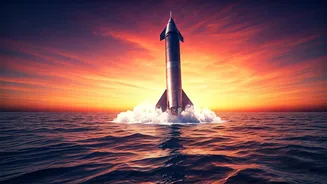
The latest iteration of SpaceX's colossal Starship vehicle embarked on a significant test flight, charting a course towards its designated landing zone
in the vast expanse of the Indian Ocean. Despite encountering some minor hiccups with its engine systems during the ascent and flight, the spacecraft managed to achieve its primary objective: reaching the predetermined destination. This successful transit is a testament to the ongoing advancements in rocket technology and the meticulous engineering that underpins SpaceX's ambitious projects. The ability to maintain trajectory and control, even with unforeseen engine issues, underscores the resilience and robustness being built into the Starship program, paving the way for future missions that demand precision and reliability across extended durations and complex flight profiles.
Fiery Splashdown Significance
Upon reaching its target location over the Indian Ocean, the Starship underwent its final phase: a controlled splashdown. This dramatic end to the test flight was characterized by a spectacular, fiery descent into the water. SpaceX representatives have emphasized that this intense re-entry and impact are not failures, but rather integral and expected components of the testing regimen. Such controlled destructiveness during test phases allows engineers to gather invaluable data regarding the vehicle's structural integrity, thermal management systems, and overall performance under extreme conditions. This approach, while visually striking, is crucial for understanding the limits of the technology and for refining designs to ensure greater success in subsequent, more critical missions, ultimately bringing the vision of reusable interplanetary spacecraft closer to reality.