


Transformative Travel Time
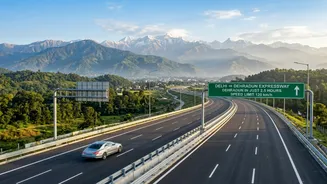
The Delhi-Dehradun Economic Corridor marks a monumental shift in connectivity between the national capital and the gateway to Uttarakhand. Previously,
traversing the distance could take up to six hours, presenting a considerable challenge for both commuters and commercial entities. However, this groundbreaking infrastructure project has dramatically reduced that travel duration to an astonishing 2.5 hours. This significant time saving is poised to revolutionize travel, making day trips feasible and fostering increased economic and recreational interaction between the two regions. The impact of this enhanced accessibility extends beyond mere convenience, promising to stimulate tourism and trade by making Dehradun a much more reachable destination from Delhi.
Impressive Scale and Investment
Stretching an impressive 213 kilometers, the Delhi-Dehradun Economic Corridor is a massive undertaking designed for high-speed, efficient transit. The construction of this six-lane, access-controlled expressway represents a substantial investment, with the project's cost exceeding Rs 12,000 crore. This financial commitment underscores the scale and importance of the corridor, which passes through three key states: Delhi, Uttar Pradesh, and Uttarakhand. For frequent users, the economic benefits are also evident in the toll structure; FASTag Annual pass holders can expect to pay just over Rs 60 for a one-way journey across its four toll plazas, making it an economically viable option for regular travel.
Phased Development Unveiled
The ambitious Delhi-Dehradun Economic Corridor has been meticulously planned and executed in four distinct phases to ensure efficient development. The initial segment, spanning 31.6 kilometers from Akshardham to Khekra near the Eastern Peripheral Expressway, involved upgrading an existing route into a six-lane elevated road complete with a parallel service lane. The second phase, a substantial 120 kilometers from the EPE interchange at Baghpat to the Saharanpur bypass, was constructed entirely as a greenfield project, meaning it was built on new land. The third phase, covering approximately 42 kilometers from the Saharanpur bypass to Ganeshpur in Uttarakhand, has already reached completion. Finally, the last segment, about 20 kilometers from Ganeshpur to Dehradun, includes a 4.6 kilometer upgraded stretch alongside newly constructed portions, finalizing the corridor's connectivity.
Harmony with Nature
Recognizing the ecological sensitivity of the region, the Delhi-Dehradun Economic Corridor has been designed with paramount importance placed on minimizing human-wildlife conflict. A significant feature is the inclusion of a 12-kilometer elevated wildlife corridor, one of the longest in Asia, which runs through the ecologically vital Rajaji National Park in the Shiwalik Hills. This elevated structure allows for unhindered animal movement, preserving biodiversity. Complementing this are eight designated animal crossings and two substantial elephant underpasses, each measuring 200 meters in length, ensuring safe passage for wildlife. Additionally, a 370-meter tunnel has been constructed near the Daat Kali temple to further facilitate coexistence between the expressway and the natural environment.
Advanced Features for Safety
Beyond its impressive scale and environmental considerations, the Delhi-Dehradun Economic Corridor is equipped with a suite of advanced features designed to enhance traveler experience and safety. The project scope encompasses the development of ten interchanges, facilitating seamless transitions between different road networks. It also includes three railway over bridges and four major bridges to ensure smooth passage over obstacles. For traveler convenience, twelve wayside facilities are integrated along the route, providing essential services. Furthermore, the entire corridor is fitted with an Advanced Traffic Management System. This sophisticated system uses real-time data and technology to monitor traffic flow, improve safety, and optimize overall travel efficiency, ensuring a secure and pleasant journey for all users.
Navigating the Route
The Delhi-Dehradun Economic Corridor's route has been strategically mapped to maximize efficiency and connectivity. While the exact route details can be complex, the expressway connects key points between Delhi and Dehradun, significantly altering the travel experience. For those using the route, the speed limit is set at 80 kmph for trucks and 100 kmph for cars, balancing speed with safety. The corridor's infrastructure is designed to accommodate high-speed traffic, but adherence to these limits is crucial for maintaining safety and ensuring the intended travel times are met. The anticipation for its full opening, scheduled for April 14, 2026, highlights the widespread expectation for its benefits.