
Atmospheric Firsts
The JWST has detected an atmosphere on the ultra-hot super-Earth TOI-561 b. This discovery defied existing theoretical models, which predicted that such
a hot planet would have lost its atmosphere due to intense radiation from its star. The presence of an atmosphere on a planet under such extreme conditions has scientists rethinking their understanding of planetary formation and evolution. The JWST's capacity to analyze the composition of exoplanet atmospheres is unprecedented, and the data gathered could aid in detecting potential signs of life beyond Earth in the future.
Dark Matter Unveiled
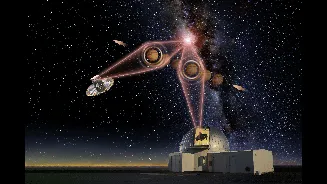
JWST’s observations might open up a new avenue to understanding dark matter. While the exact nature of dark matter remains a mystery, the telescope's unique capabilities could indirectly shed light on this elusive substance. It is thought that the study of the distribution of galaxies and the gravitational lensing effects caused by dark matter could provide clues. The telescope's deep-space surveys are expected to generate vast amounts of data, which scientists will analyze to look for subtle variations in light patterns, potentially revealing dark matter's presence and its interactions within the universe.
Black Hole Discovery
The JWST also confirmed the existence of a runaway supermassive black hole hurtling through space. This discovery provides a unique opportunity to study how black holes interact with their environments. The data gained will help scientists investigate the physics of these extraordinary cosmic objects. The telescope's ability to peer through dust and gas clouds makes it ideal for observing black holes, which typically reside at the centers of galaxies. Detailed investigations of this runaway black hole will help to further enhance the understanding of how galaxies evolve and interact over cosmic time.