
Cosmic Fireworks Display
Gamma-ray bursts (GRBs) are the most energetic explosions in the universe, typically originating from the collapse of massive stars or the merger of neutron
stars. These events release an enormous amount of energy in the form of gamma rays, the highest-energy form of light. Standard GRBs last from a few milliseconds to a few minutes, making the duration of this recent burst all the more extraordinary. This particular burst, named GRB 221009A, was detected on October 9, 2022, and it has captured the attention of astronomers globally due to its exceptional longevity. The sheer intensity and duration suggest an unusually powerful event, providing an unprecedented opportunity to study the physics behind these phenomena.
Unprecedented Duration Noted
What set GRB 221009A apart was its remarkable duration, exceeding 10 minutes, a timeframe significantly longer than typical GRBs. This prolonged duration allowed astronomers to gather extensive data about the event's evolution. Observations were carried out across multiple wavelengths, ranging from radio waves to X-rays, providing a comprehensive understanding of the burst's properties. The prolonged emission offers a unique look at the energetic processes occurring at the heart of the burst, giving insight into the formation of stellar objects. The extensive data collected could help refine models of GRB progenitors and the mechanisms that fuel them. This allows a deeper comprehension of how some of the most dramatic events in the universe operate.
Origins and Implications
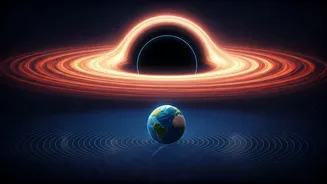
The source of GRB 221009A is believed to be a massive star collapsing into a black hole. As the star's core collapses, it triggers the formation of a jet of particles moving close to the speed of light. This jet then interacts with the surrounding material, generating intense gamma-ray emissions. The length of the burst suggests that the jet was able to maintain its power and emit gamma rays for an unusually long period. Analyzing the properties of this exceptional burst can provide valuable insights into star formation, black hole formation, and the physics governing extreme environments. The comprehensive data gathered on this burst enables astronomers to refine existing models. These models describe the events related to powerful explosions like GRBs, improving our overall comprehension of the universe.
Future Research Awaits
This discovery marks a turning point in GRB research, and scientists are now focusing their efforts on analyzing the data collected from GRB 221009A. This extensive data will allow astronomers to refine their models of GRB progenitors and the underlying mechanisms that fuel them. Further studies will likely involve detailed analyses of the afterglow of the burst, including its evolution across different wavelengths. This will assist in uncovering more about the environment surrounding the burst's source. With this recent discovery, there is a wealth of information to be analyzed and explored. Scientists will be working to understand more about the mechanisms driving these powerful events.