





Ancient Soil's Remarkable Properties
Deep within the Amazon rainforest lies a testament to ancient ingenuity: a 2,000-year-old soil known as Amazonian Dark Earth, or 'Terra Preta.' This incredibly
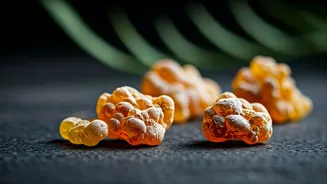
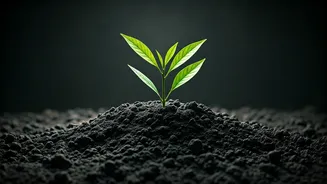
fertile soil was intentionally created by pre-Columbian peoples who ingeniously combined charcoal with organic refuse and various minerals. Modern scientific investigations are now revealing the profound benefits of this ancient practice. ADE doesn't merely supply plants with essential nutrients; it actively transforms the soil's microscopic environment. It cultivates a thriving community of beneficial microorganisms that actively promote robust root development. In controlled experimental settings, trees cultivated in ADE-enhanced soil have demonstrated growth rates up to six times faster than those in conventional soil. This remarkable finding presents an age-old solution perfectly suited to address contemporary environmental challenges, particularly the urgent need for global forest restoration efforts.
Empirical Evidence of Growth Boost
Research meticulously documented in a scientific journal confirms that Amazonian Dark Earth emerged between 450 BCE and 950 CE. What sets ADE apart from the surrounding nutrient-deficient soils is its substantial composition of stable organic matter and biochar. Scientists at the University of São Paulo conducted compelling experiments, notably with Pink Trumpet tree seedlings (Handroanthus heptaphyllus). When these seedlings were planted in soil containing just 20 percent ADE, they achieved an impressive 55 percent increase in height. Similarly, Brazilian Firetree seedlings (Schizolobium parahyba) experienced a notable 20 percent surge in height when compared to their counterparts grown in ordinary soil. These findings underscore ADE's direct and quantifiable impact on arboreal growth.
Microbial Powerhouse for Growth
The astonishing acceleration in tree growth attributed to ADE is largely driven by its unique microbial inhabitants, as revealed by genomic analyses supported by EurekAlert and the São Paulo Research Foundation (FAPESP). Amazonian Dark Earth functions as a veritable 'microbial reef,' fostering an environment rich in specific bacterial groups, particularly Actinobacteria and Proteobacteria. These microbes significantly enhance a plant's capacity to absorb vital nutrients like phosphorus, calcium, and magnesium. This distinct microbial presence fundamentally alters the rhizosphere, the critical zone of soil immediately surrounding plant roots. This sophisticated soil ecosystem not only aids trees in warding off diseases but also optimizes nutrient assimilation far more effectively than conventional artificial fertilizers can achieve.
Carbon Sequestration Potential
Further insights from the National Centre for Biotechnology Information highlight the pivotal role of biochar in Terra Preta's exceptional properties. Biochar is a highly stable form of carbon produced through a process known as low-oxygen pyrolysis. This charcoal acts much like a highly effective sponge, adeptly retaining essential nutrients and preventing their dissolution and loss, especially during intense tropical rainfall. Crucially, soils rich in biochar, such as ADE, possess the remarkable ability to store up to six times more carbon than the adjacent oxisols. This extraordinary carbon sequestration capacity positions ADE as an indispensable component in contemporary strategies aimed at combating climate change and mitigating its effects.
Ancient Wisdom Over Modern Methods
A study published in Science Advances suggests that Amazonian Dark Earth could significantly reduce the reliance on chemical fertilizers, which are often used in tropical reforestation initiatives. Researchers are actively exploring methods to artificially replicate this fertile 'black gold' by emulating the ancient techniques used to create ADE, specifically by combining biochar with organic waste. Moreover, experimental results indicate that trees cultivated with ADE not only achieve greater heights but also exhibit a substantial increase in overall biomass. This compelling evidence strongly suggests that sophisticated indigenous agricultural techniques from the past often surpass the efficacy of current, modern farming practices in achieving sustainable and robust plant growth.