




Early March Planet Parade
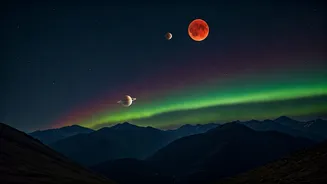
As March begins, avid astronomers have a second chance to witness a remarkable gathering of planets. After sunset, cast your gaze towards the western horizon
to find Mercury, Venus, and Saturn appearing quite close together. Simultaneously, the bright planet Jupiter will be prominently visible high in the southeastern sky. While Uranus and Neptune are also in the sky, spotting them will require optical assistance such as strong binoculars or a telescope. Neptune, in particular, presents a challenge as it sets shortly after the sun, so it's crucial to avoid pointing any viewing instruments westward until after the sun has fully descended below the horizon.
Total Lunar Eclipse Arrives
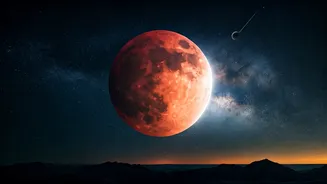
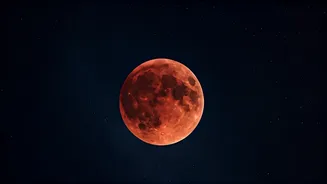
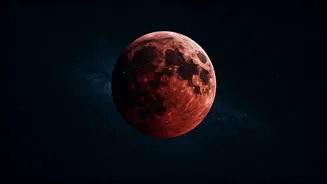
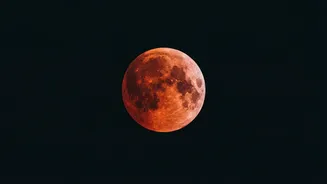
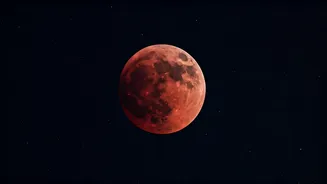
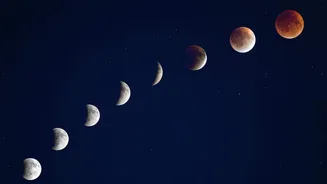
On the morning of March 3rd, the night sky will host a spectacular total lunar eclipse, a phenomenon that will transform the full worm moon into a deep, mesmerizing tangerine or blood-red color. This captivating visual effect occurs when Earth positions itself directly between the sun and the moon. As the moon passes through Earth's shadow, known as the umbra, shorter wavelengths of sunlight are scattered, allowing the longer, red wavelengths to pass through and illuminate the lunar surface with its signature reddish glow. This celestial event promises to be visible across all of the United States, with observers on the West Coast likely having the most advantageous viewing experience due to the eclipse happening earlier in their morning, well before moonset and appearing higher in the sky. East Coast viewers may need to seek out unobstructed western vistas as the eclipse occurs closer to moonset.
Venus and Saturn Unite
Mark your calendars for March 7th and 8th, as Venus and Saturn will engage in a close celestial dance. During these evenings, the two planets will appear in close proximity in the sky, close enough to be observed together through a pair of binoculars. Position yourself to look towards the west just above the horizon, where this planetary pair will remain visible for approximately 45 minutes after the sun sets. While their closest approach is on these specific nights, their proximity will be noticeable in the evenings both preceding and following the main event, offering a prolonged opportunity for observation.
New Moon and Zodiacal Glow
March 19th marks the new moon, a period characterized by the absence of moonlight, creating ideal conditions for stargazing. This darkness significantly enhances the visibility of fainter celestial objects, such as the Beehive Cluster, allowing for a more profound exploration of deep-space wonders. This mid-March timeframe also presents an excellent opportunity to observe the zodiacal light. This subtle, pyramid-shaped luminescence appears in the western sky as twilight fades, caused by sunlight reflecting off dust particles within the inner solar system. While visible until May, its prominence is greatest around the equinox, especially under the dark skies afforded by a new moon.
Spring Equinox Aurora Potential
March 20th signifies the spring equinox in the Northern Hemisphere, marking the official start of the season. This astronomical event often coincides with heightened activity in the aurora borealis due to the Earth's axial tilt. Consequently, there's an increased likelihood of witnessing the mesmerising Northern Lights, even in more southerly regions than usual. Prime viewing locations like Alaska remain excellent choices due to their typically clear March skies, but areas further south, such as along the Great Lakes, might also offer a chance to catch this captivating natural light show.
Moon Nears Pleiades
Around March 22nd, the slender crescent moon will make a beautiful appearance near the Pleiades star cluster, one of the most striking collections of stars visible to the naked eye. To witness this pairing, direct your attention to the western sky shortly after twilight begins, typically about 60 to 90 minutes after sunset. During this time, the bright planet Venus will also be visible low on the western horizon, adding another celestial highlight to the evening's spectacle.
Jupiter-Moon Encounter
On the nights of March 26th and 27th, Jupiter and a gibbous moon will share the southwestern sky, appearing in close proximity to the constellation Orion. This celestial duo will be visible from sunset until the early morning hours, moving across the sky together. For those interested, seeking out the planet Venus low on the horizon around sunset might also be fruitful, as it will be in alignment before it sets.
Regulus Occultation
The night of March 29th into March 30th brings a fascinating event where the moon will appear to pass in front of the bright star Regulus. While skywatchers in certain parts of Africa, Asia, and Europe will witness a direct lunar occultation, where the moon completely obscures the star, observers in the United States will see the moon journeying closely past Regulus throughout the night.
Milky Way's Core Visibility
Throughout the entire month of March, the luminous core of our Milky Way galaxy becomes increasingly observable during the pre-dawn hours. This magnificent galactic center rises in the southeast and arcs across the sky above the southern horizon before sunrise. To truly appreciate its splendor, it is highly recommended to travel to a designated dark-sky location, far from the interference of artificial light pollution. National Parks like the Grand Canyon or Canyonlands in Utah offer pristine conditions for experiencing the breathtaking panorama of the Milky Way.