






Contact Restored Post-Blackout
NASA's ambitious Artemis 2 mission successfully navigated a challenging phase by re-establishing vital communication links with Mission Control following
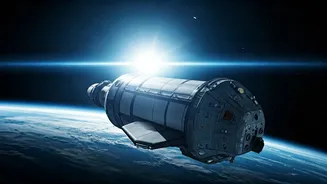
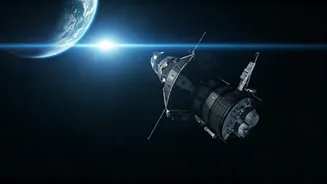
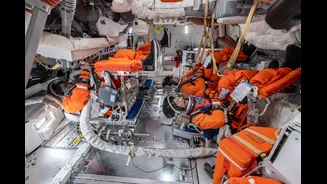
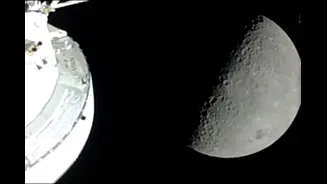
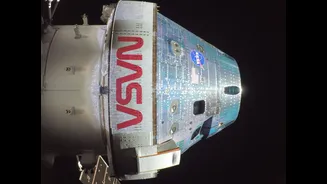
a 40-minute period of radio silence. This critical communication loss occurred as the Orion spacecraft traversed the far side of the Moon, a natural phenomenon that temporarily blocked its signals from the Deep Space Network. This intentional 'loss of signal' period served as a significant test for both the crew's self-reliance and the spacecraft's advanced automated systems. The astronauts eventually reconnected with ground control at 7:24 PM EDT on April 6, 2026, reporting that all onboard systems were functioning optimally. This event marks the furthest humans have ventured into deep space, laying crucial groundwork for future lunar expeditions and beyond.
Lunar Flyby and Eclipse
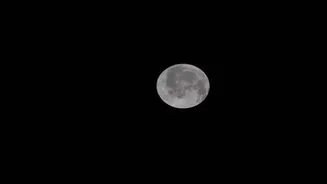
On April 6, 2026, at 6:44 PM EDT, Orion began its journey behind the Moon, initiating a planned communication blackout that lasted until 7:24 PM EDT. During this period, the spacecraft executed its first close flyby of the lunar surface, coming within an astonishing 4,067 miles of its craters and terrain. Shortly after regaining contact, at 8:35 PM EDT, the Artemis II crew was afforded a unique celestial spectacle: a total solar eclipse observed from their vantage point in orbit. For 53 minutes, the Moon completely obscured the Sun, providing an unparalleled opportunity to study the Sun's outer atmosphere, the corona, without the glare of direct sunlight. This observation phase was instrumental in gathering scientific data relevant to solar physics.
Historic Distance Record
The Artemis II mission achieved a monumental milestone in human space exploration on April 6, 2026, at 7:07 PM EDT, officially breaking the long-standing record for the furthest distance traveled from Earth by humans. The Orion spacecraft reached a maximum distance of 252,756 miles from Earth, surpassing the Apollo 13 mission's record of 248,655 miles, set in April 1970. This historic feat was accomplished while the crew was actively engaged in high-altitude lunar observation, utilizing sophisticated high-resolution imaging systems to collect valuable data on the Moon's geological composition and mineral makeup. This achievement underscores the technological advancements and the expanded reach of current space exploration capabilities.
Return Trajectory and Recovery
As Orion emerged from behind the Moon at 7:25 PM EDT, the astronauts were treated to a breathtaking 'Earthrise' view, and simultaneously, Mission Control re-established a solid signal with the spacecraft. This observation period, spanning over seven hours, allowed the crew to visually identify and meticulously record significant lunar features, including the vast Orientale Basin and the Hertzsprung Basin. The spacecraft is now progressing on a carefully calculated free-return trajectory, leveraging the gravitational forces of both Earth and the Moon to guide it back for a planned splashdown. The mission is scheduled for a return to the Pacific Ocean on April 10. Preparations for the safe recovery of the crew and the Orion capsule are already underway, involving the US Navy and specialized recovery assets.
Splashdown and Recovery
NASA and the U.S. Navy have initiated the crucial recovery phase of the Artemis 2 mission, ensuring the safe return of the crew. The USS John P. Murtha, a specialized amphibious transport dock ship, has departed from Naval Base San Diego and is en route to the designated recovery zone in the Pacific Ocean. This vessel is equipped with essential recovery apparatus, such as a recovery cradle, high-speed boats, and other specialized equipment designed for retrieving the Orion capsule from the open sea. NASA's Exploration Ground Systems team is collaborating with the Navy to orchestrate the 'Open Ocean Recovery' operations. The anticipated splashdown is slated for 8:07 PM EDT (5:07 PM PDT) on April 10, approximately 60 miles offshore from San Diego, California. Upon entry, Navy divers will secure the capsule with a stabilizing device before it is winched into the ship's well deck, facilitating a secure and efficient retrieval process for both astronauts and the spacecraft.