






Marketing or Manipulation?
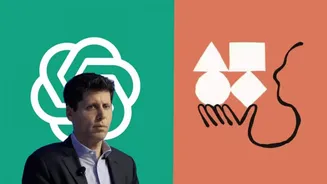
The burgeoning field of artificial intelligence is witnessing a heated exchange of words, spearheaded by Sam Altman, the chief executive of OpenAI. He
has publicly decried the promotional tactics employed by Anthropic, a prominent AI developer, in relation to their recently unveiled model, Claude Mythos. Altman characterizes Anthropic's narrative around Claude Mythos, which portrays it as a potentially formidable hacking tool, as 'fear-based marketing.' This approach, he suggests, could serve as a veiled justification for concentrating advanced AI capabilities within the grasp of a select few. Altman draws a sharp analogy, comparing it to selling an 'apocalypse' and then offering a 'bomb shelter' at an exorbitant price, implying that such discourse is designed to create a sense of urgency and dependence, thereby controlling access to powerful AI technologies and potentially stifling broader innovation and democratized use. This critique comes at a time when the broader implications and safety of AI systems are under intense scrutiny globally, adding another layer to the ongoing discourse.
A History of Hype
The practice of generating significant buzz around AI models by highlighting their potential dangers isn't a novel phenomenon within the industry. This tactic has been observed before, even involving companies now at the forefront of the AI race. For instance, back in 2020, when Dario Amodei, who would later found Anthropic, was still associated with OpenAI, there was considerable hype surrounding the GPT-3 model. At that juncture, claims emerged suggesting that GPT-3 was too perilous for widespread public release. This pattern of leveraging alarming narratives has since become a recurring strategy for leading AI firms, including both OpenAI and Anthropic, in their efforts to generate excitement and attention for their respective AI advancements and to shape public perception regarding their capabilities and risks.
Unauthorized Access Concerns
Recent reports have brought to light concerning incidents of unauthorized individuals gaining access to the Claude Mythos model shortly after its initial announcement. According to information published by Bloomberg, these unauthorized accesses were facilitated through various means, including the exploitation of credentials belonging to individuals connected with third-party collaborators of Anthropic. While the reported intention of these individuals appears to be exploratory—focused on understanding and interacting with the new model's functionalities rather than malicious exploitation—the breach itself raises significant questions about the security protocols surrounding access to such advanced AI systems. The fact that unauthorized parties could obtain access, even if their immediate actions were not destructive, underscores the importance of robust security measures and access controls for cutting-edge AI technologies, especially those being marketed with cautionary tales.
Rivalry and Value
This public critique from Sam Altman is not an isolated incident; it represents a continuation of a discernible rivalry between OpenAI and Anthropic. Altman has previously positioned OpenAI's offerings as more cost-effective and superior alternatives to those provided by Anthropic's Claude. Notably, when discussions arose regarding changes to Anthropic's Claude Code pricing, Altman took the opportunity to highlight that OpenAI's Codex model is accessible through both free and paid tiers, emphasizing his company's commitment to enabling broad AI adoption. This stance was further evidenced when he alluded to users not facing diminished usage limits, a comment widely interpreted as a subtle jab at Anthropic, following reports from Claude Code users encountering faster-than-expected usage caps. These exchanges underscore a competitive landscape where pricing, accessibility, and perceived value are key battlegrounds.