






What is Streaming?
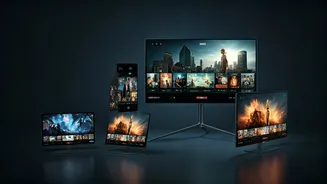
Streaming, in essence, is the live transmission of content, allowing users to access it without the need for downloading files. It's become a cornerstone
of our digital experience, covering a wide array of content, including movies, TV shows, music, podcasts, and even live events. Unlike traditional media, streaming enables on-demand access, granting users the freedom to choose what they watch, listen to, or view, and when they do so. The ease and convenience of streaming platforms have made them incredibly popular, especially with mobile devices and smart TVs. Consequently, it has dramatically altered the ways in which media is created, distributed, and consumed, prompting a shift away from traditional broadcasting models.
How Streaming Works
At the heart of streaming lies a sophisticated technology that involves encoding content into digital format and breaking it into small packets. These packets are transmitted over the internet to a user's device. When a user requests to view or listen to something, the streaming service's servers send the content packets. The user's device, whether it's a computer, smartphone, or smart TV, receives these packets and reconstructs the content, enabling the user to watch or listen in real time. This process is continuous, ensuring that the content plays smoothly. The technology used to compress and transmit data, coupled with high-speed internet connections, plays a key role in the seamless delivery of streaming content. This approach minimizes buffering and offers a satisfying user experience. The quality of the streaming experience is influenced by factors such as internet speed, the capabilities of the device, and the efficiency of the streaming service's infrastructure.
Types of Streaming Services
The streaming landscape is populated by various types of services, each catering to specific content preferences and consumer needs. Subscription-based streaming services are perhaps the most widespread, offering on-demand access to a vast library of content for a monthly fee. These platforms like Netflix, Amazon Prime Video, and others, invest heavily in original programming and licensed content to draw subscribers. Another category is live streaming services, which broadcast content in real-time, ranging from sports events to news broadcasts and video game streams. Platforms like YouTube TV and Twitch have become popular venues. Advertising-based streaming services provide free access to content, supported by ads, offering an alternative for users who are willing to watch ads in exchange for free entertainment. Some services also focus on specific content niches, like music streaming, offering ad-supported or paid subscription plans.
Impact on Content Creation
Streaming has triggered significant changes in the landscape of content creation, influencing how content is produced, distributed, and consumed. The rise of streaming platforms has provided creators with new avenues to reach their audiences, allowing them to bypass the traditional gatekeepers of the media industry. Streaming services invest heavily in original content, resulting in a surge of production budgets and creative opportunities for writers, directors, and actors. This has also encouraged a wider variety of content, catering to diverse tastes and niche audiences. Streaming platforms use data analytics to inform content decisions, allowing them to optimize their offerings based on viewer preferences and viewing habits. Consequently, content creators must adapt their strategies to compete in the streaming ecosystem.
Impact on Consumption Habits
Streaming has dramatically reshaped the way audiences consume media, influencing our daily habits and expectations. The on-demand nature of streaming platforms gives users unmatched control over their viewing experiences, allowing them to choose what to watch, when to watch it, and where to watch it. Binge-watching has become a common behavior, with viewers often consuming multiple episodes or seasons of a show in a single sitting. The portability of streaming, supported by mobile devices, enables users to access content anytime, anywhere. This has led to the decline of traditional television viewing habits, with audiences increasingly shifting their attention to streaming platforms. Streaming services have also fostered a culture of recommendation, introducing viewers to new content based on their past viewing history, which further reinforces individual preferences.
Challenges and Future Trends
Despite its successes, the streaming industry faces ongoing challenges. Content piracy poses a threat to revenue streams, while intense competition between platforms necessitates strategies like aggressive content acquisition and innovative user experiences. The cost of subscriptions can add up, causing some consumers to subscribe to multiple services or choose the best value for their money. Looking ahead, the streaming industry is expected to evolve further. Technological advancements, such as the increased adoption of 5G and advancements in virtual reality and augmented reality, are likely to enhance streaming experiences. The industry is also seeing trends like the bundling of streaming services with other subscription-based offerings. Competition among streaming platforms will continue to intensify, driving innovation and shaping the future of content consumption.