







Test Objective Achieved
On April 10th, the Indian Space Research Organisation (ISRO) marked a significant milestone by completing the second Integrated Air Drop Test (IADT-02)
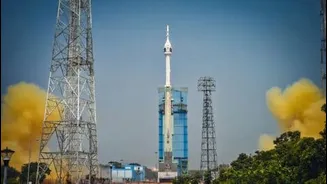
at the Satish Dhawan Space Centre in Sriharikota. This test is a vital step in ensuring the safety of astronauts for the upcoming Gaganyaan mission, India's first human spaceflight program. The primary objective of IADT-02 was to evaluate the performance of the crew module's systems during a simulated emergency descent and landing scenario, mirroring conditions that might occur during re-entry into Earth's atmosphere and subsequent touchdown in the sea. This rigorous testing protocol is designed to build confidence in the spacecraft's ability to protect its occupants during critical flight phases, moving ISRO closer to its goal of sending humans into space.
Simulated Crew Module Drop
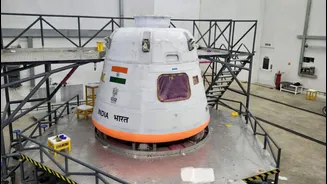
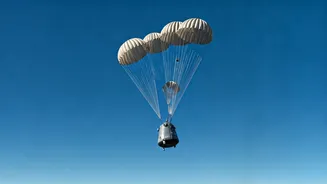
The IADT-02 involved a sophisticated procedure where a replica of the Gaganyaan crew module, weighing approximately 5.7 tonnes, was used. This mass is designed to be equivalent to the actual crew module that will carry astronauts in the first uncrewed Gaganyaan mission (G1). An Indian Air Force Chinook helicopter was instrumental in lifting this weighty module to an altitude of roughly 3 kilometers above sea level. From this height, the simulated crew module was released, free-falling towards a pre-determined drop zone located in the waters off the Sriharikota coast. This carefully orchestrated drop allowed engineers to gather crucial data on parachute deployment, descent trajectory, and the overall integrity of the module upon impact with the water, validating the design and functionality of its recovery systems.