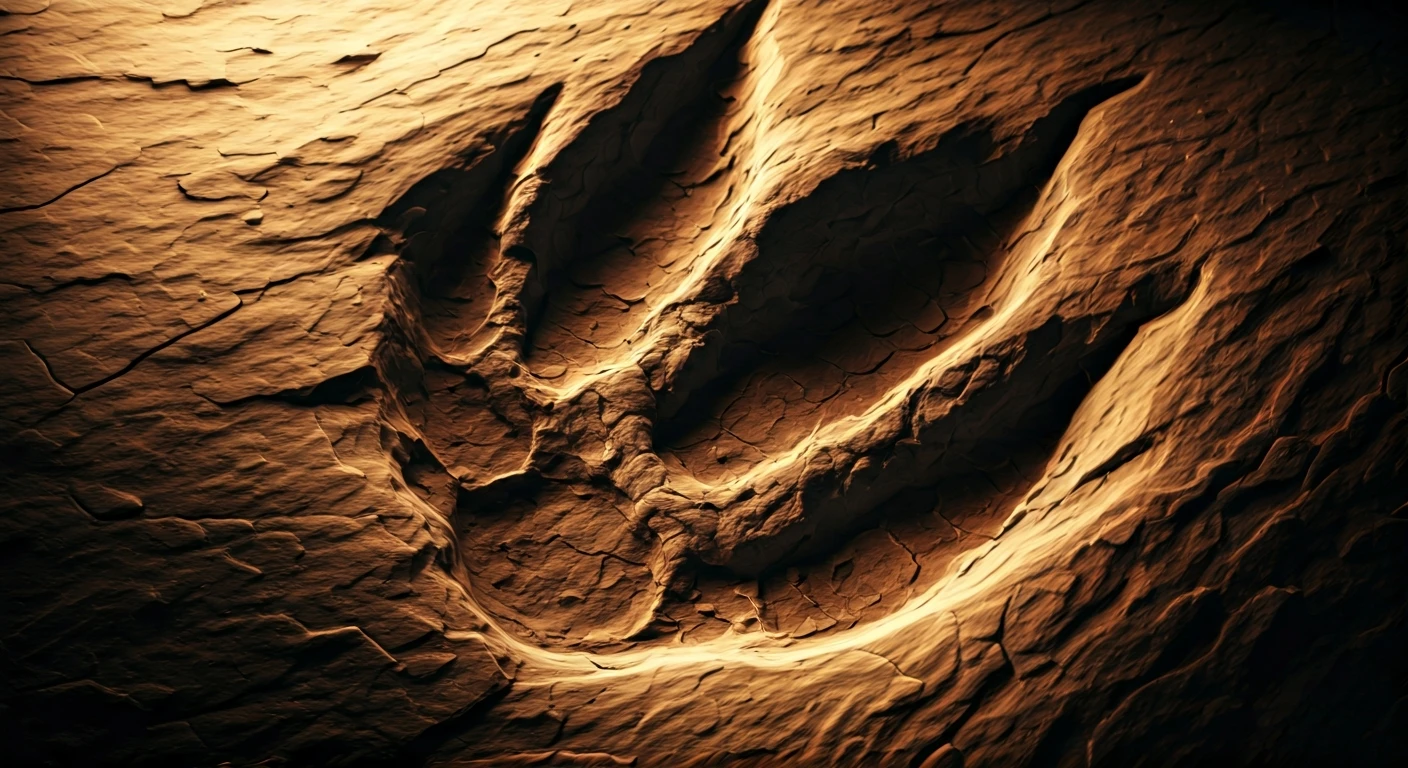







Footprints: Ancient Clues
Fossilized footprints serve as one of the most abundant records of dinosaur life, offering invaluable insights into ancient environments and the coexisting
fauna. While sometimes found as isolated specimens, they often appear in dense, complex arrangements, akin to prehistoric dance floors. However, the challenge of definitively linking a specific track to a particular dinosaur species has historically been a significant hurdle in paleontological research. These tracks, alongside other fossil evidence like bones, teeth, and skin impressions, provide a multifaceted view of the past. Footprints, in particular, are frequently more numerous and can paint a detailed picture of the dinosaur's habitat and the broader ecosystem it inhabited, especially when found in association with other tracks. Understanding who made these prints is crucial for reconstructing the lives and interactions of these magnificent creatures that roamed the Earth millions of years ago.
AI's Analytical Power
A groundbreaking new methodology has emerged, leveraging artificial intelligence to assist in the precise identification of dinosaur species based on their footprints. This innovative approach analyzes eight distinct characteristics of a given track, moving beyond subjective human interpretation to provide a more objective classification. Dr. Gregor Hartmann, lead author from Helmholtz-Zentrum Berlin, emphasizes that this method offers a standardized way to categorize and compare fossilized tracks, reducing the inherent biases of personal judgment. The AI was trained on a substantial dataset, comprising 1,974 footprint silhouettes that span an impressive 150 million years of dinosaur history. Through this extensive analysis, the algorithm identified eight specific features that significantly contribute to the variations observed in track shapes, enabling a more accurate and consistent identification process for researchers worldwide.
Key Track Characteristics
The artificial intelligence algorithm delves into eight specific features of a dinosaur footprint to determine its origin. These crucial characteristics include the overall load distribution and shape, which indicate the area of the foot that contacted the ground. The precise position of this loading is also a significant factor. Furthermore, the degree to which the toes are spread apart and how they are attached to the foot provide distinguishing information. The placement of the heel and the load it bears are equally important. The algorithm also considers the relative emphasis placed on the toes versus the heel, and any discrepancies in shape between the left and right sides of the track. By meticulously evaluating these eight attributes, the AI can differentiate between tracks made by various dinosaur species, offering a more objective and scientific approach to paleontological identification than ever before.
Expert Validation and Challenges
After the AI algorithm identified the key differentiating traits within fossilized footprints, paleontologists cross-referenced these findings with existing expert classifications. This process involved charting how the AI-identified features corresponded to the dinosaur species previously believed to have made those tracks. This collaborative effort aims to refine the identification of future discoveries. However, identifying the maker of a fossilized footprint remains inherently complex, as Dr. Hartmann points out. The shape of a track is influenced by numerous factors beyond the dinosaur itself, such as its activity (walking, running, jumping, or even swimming), the moisture content and composition of the substrate, how the footprint was subsequently buried by sediment, and subsequent erosion over geological time. Consequently, a single dinosaur can produce remarkably different-looking tracks under varying conditions, highlighting the intricate puzzle that paleontologists strive to solve.
Avian Ancestry Clues
One of the most compelling outcomes from the AI's analysis involves seven small, three-toed footprints dating back approximately 210 million years from South Africa. The algorithm's findings corroborated prior scientific assessments that these tracks bear a striking resemblance to those made by birds, despite being around 60 million years older than the earliest known avian fossils. This observation is particularly significant given that birds are known to have evolved from small, bipedal feathered dinosaurs. While this discovery doesn't definitively prove the tracks were made by birds themselves, senior study author Steve Brusatte suggests they could have been produced by previously undiscovered dinosaurs ancestral to birds, or by unrelated dinosaurs that simply possessed bird-like feet. This intriguing conclusion necessitates further investigation and compels scientists to seek comprehensive explanations for these ancient avian-like tracks.