





What is Suborbital?
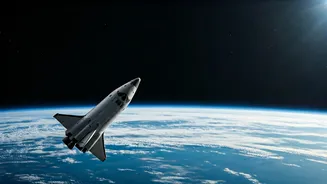
Suborbital space tourism represents a distinct approach to experiencing outer space, allowing individuals to journey to the fringes of the atmosphere without
entering a sustained orbit around our planet. This type of flight typically ascends to approximately 100 kilometers, a significant altitude recognized as the Kármán line, which delineates the boundary between Earth's atmosphere and the vast expanse of space. Unlike missions destined for orbital destinations such as the International Space Station, suborbital craft do not achieve the colossal velocities required for perpetual orbit. Instead, their trajectory mimics that of a projectile, following a parabolic path. These adventures are relatively brief, usually concluding within 10 to 15 minutes from launch to landing. A pivotal moment in the journey occurs at the apex of the flight path, where engines cease their thrust, granting passengers several minutes of exhilarating weightlessness. This allows for a surreal experience of floating freely within the spacecraft's cabin while marveling at the planet's curvature set against the profound blackness of the cosmos, visible through generously sized observation windows.
The Parabolic Flight Experience
The journey back to Earth is governed by gravity, as the vehicle lacks the necessary velocity to counteract its pull and thus descends through the atmosphere. Companies at the forefront of this burgeoning field, such as Blue Origin and Virgin Galactic, are instrumental in making these extraordinary voyages a reality. The inherent advantages of suborbital flights lie in their reduced energy requirements and less demanding thermal protection systems when compared to the complexities of orbital travel. This comparative accessibility, while still maintaining a considerable price point, positions suborbital tourism as a more attainable entry-level option for private individuals aspiring to experience the wonders of spaceflight and witness our home planet from an unparalleled perspective.