



The Zoo Life Paradox
Recent research has unveiled a curious phenomenon concerning penguins in zoological settings: they tend to live for a greater number of years than their
wild relatives, yet their biological aging process appears to be significantly accelerated. This contrasts with the common assumption that a longer life inherently equates to better health throughout those years. In human societies, factors like access to advanced medical care, nutritional availability, socioeconomic status, and environmental exposures all contribute to the complex narrative of aging. Penguins, however, provide a unique model for studying aging dynamics. Their typical lifespan of two to four decades allows for meaningful comparative analysis, and crucially, they haven't undergone the dramatic societal and environmental shifts that humans have, making them a more controlled subject for scientific inquiry. Scientists were keen to understand if the protected, abundant lifestyle offered in zoos would alter the aging trajectory of these birds, and the controlled environment of zoos presented an ideal scenario for such an investigation.
Accelerated Aging in Captivity
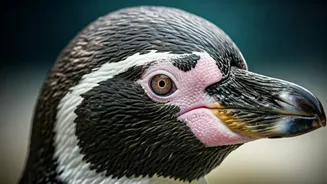
King penguins residing in zoos, such as those at Zoo Zurich and Loro Parque, experience conditions that are remarkably stable and secure, often mirroring aspects of modern human living environments. The findings from these studies are quite clear: penguins living in zoos age at a quicker pace than their counterparts in the wild. A 15-year-old penguin in a zoo setting might exhibit the physical characteristics of a 20-year-old penguin living in its natural habitat. However, the intriguing aspect is that these zoo-dwelling penguins ultimately live longer lives overall. While they might not possess the same level of physical hardiness as wild penguins, the absence of natural predators and harsh Antarctic weather, coupled with consistent access to veterinary care, allows them to survive well beyond the age they would typically reach in the Southern Ocean. Researchers have attributed these observed effects to underlying biological processes, specifically those related to metabolism, cellular renewal, and the body's maintenance systems. It is believed that the constant availability of food, reduced physical exertion, and the disruption of natural daily and seasonal rhythms inherent to the zoo environment contribute to this accelerated aging.
Longevity Versus Health
Both penguins and humans can benefit from extended lifespans when living in environments that offer sophisticated medical interventions and supportive care. Nonetheless, achieving a longer life does not automatically guarantee a life lived in robust health. The research team is actively exploring lifestyle patterns that could potentially foster both longevity and optimal health. Their current work involves implementing strategies to encourage penguins to consume less food and increase their physical activity. This effort underscores the importance of finding a balanced lifestyle, even in environments characterized by an abundance of resources, a principle that also holds significant relevance for human well-being. Identifying these moderate lifestyle choices is crucial for ensuring that longer lifespans are accompanied by good health and quality of life.