




Roots of Lunar Return
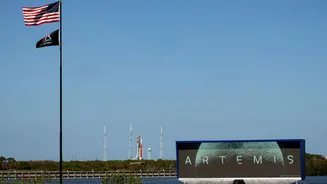
The Artemis program, spearheaded by NASA, aims to re-establish a human presence on the Moon, building upon the legacy of the Apollo missions and paving
the way for future deep-space explorations, including potential journeys to Mars. This ambitious endeavor seeks to foster sustainable lunar exploration capabilities and develop critical technologies essential for venturing further into the cosmos. The genesis of this program lies in the aspiration to go beyond low Earth orbit and conduct long-duration missions, expanding our understanding of space and our ability to thrive beyond our home planet. It represents a significant leap in our quest to explore the universe and unlock its secrets, with the Moon serving as a vital stepping stone.
Artemis I: The Foundation
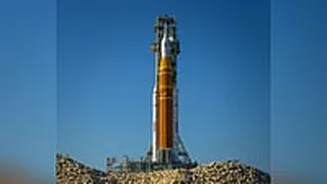
The initial phase, Artemis I, launched in 2022, served as an uncrewed test flight of the Space Launch System (SLS) rocket and the Orion spacecraft, designed to carry future crews. This critical mission successfully circumnavigated the Moon, rigorously testing vital systems like navigation, communication protocols, and the performance of Orion's heat shield during atmospheric re-entry. The data gathered from this flight was instrumental in validating the core functionalities of the spacecraft and launch vehicle, ensuring their readiness for crewed missions. This foundational step was crucial in building confidence in the technology and procedures that would underpin subsequent human expeditions to the lunar surface.
Refinements for Safety
Following Artemis I, post-mission analysis identified an unexpected "char loss" phenomenon on the heat shield during re-entry. In response, NASA implemented substantial safety enhancements. Engineers meticulously upgraded Orion's heat shield, reinforced life-support systems for increased reliability, and conducted thorough reviews of all onboard electronic components. These crucial modifications, while leading to a slight adjustment in the mission's original schedule, significantly bolstered the spacecraft's resilience and ensured a higher level of safety for the astronauts. The commitment to meticulous review and continuous improvement underscores NASA's dedication to crew well-being.
The Historic Crew
In 2023, NASA announced the four astronauts selected to embark on the Artemis II mission: Reid Wiseman, Victor Glover, Christina Koch, and Jeremy Hansen. This crew selection represents a landmark moment in space exploration, featuring the first person of color to journey to the Moon, the first woman to participate in a lunar mission, and an international partner, highlighting the collaborative nature of modern space endeavors. This diverse team brings a wealth of experience and a unique perspective to this pioneering voyage, symbolizing a new era of inclusivity in humanity's reach for the stars.
Mission Objectives Deepened
At its heart, Artemis II is dedicated to validating the performance of deep-space systems with a human crew at the helm. The mission will meticulously evaluate Orion's critical life support, navigation, and communication technologies under real-world conditions. Furthermore, it serves as a vital precursor, laying the groundwork for subsequent lunar landing missions and the long-term objective of human exploration extending beyond Earth's orbit. The insights gained from this crewed lunar flyby will be indispensable for planning future missions to the Moon and eventual voyages to Mars.
Launch and Journey
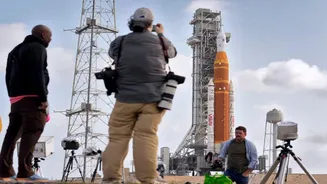
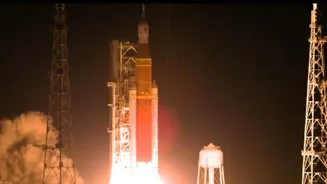
The Artemis II mission commenced its journey with a launch aboard the powerful SLS rocket from Kennedy Space Centre on April 1, 2026, at 6:35 pm ET (3:35 am, Thursday IST). This event marked the first crewed mission to venture towards the Moon in over five decades, sending its four-astronaut crew on an approximately 10-day expedition. Upon achieving lunar orbit, the rocket's stages separated from the Orion spacecraft. The spacecraft then unfurled its solar arrays and proceeded independently, while the crew initiated onboard operations, including crucial navigation checks and system tests as they charted their course.
Lunar Flyby and Return
The planned duration for the Artemis II mission is approximately 10 days, culminating in a close flyby of the Moon. Following this lunar encounter, the Orion spacecraft is slated for a high-speed re-entry into Earth's atmosphere. The mission concludes with a planned splashdown in the Pacific Ocean, where teams from the US Navy will be on standby to safely retrieve the astronauts and the spacecraft. This carefully orchestrated return sequence is designed to ensure the crew's secure re-acclimation to Earth's environment after their historic journey.