



The OLED Advantage
OLED, or Organic Light-Emitting Diode, technology has already established itself as a frontrunner in display technology due to its self-emissive nature.
Unlike traditional LCDs, OLEDs don't require backlights, which lead to thinner, more efficient designs. But beyond the advantages in terms of design, OLEDs offer unparalleled image quality due to their exceptional contrast ratios and fast response times. It has the ability to produce deeper blacks and more vivid colors, enhancing the viewing experience. However, the true potential of OLED technology is being unlocked through innovation in flexibility. This allows for applications previously unimaginable, such as screens that can be stretched, folded, or even wrapped around objects, paving the way for a new generation of versatile and dynamic displays.
Stretching the Limits
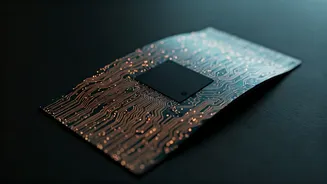
The remarkable feature of stretchable OLED screens lies in their ability to withstand deformation while preserving their functionality. To achieve this, scientists have had to rethink the fundamental components of a display. They developed novel materials like specialized polymers and innovative designs that allow the screen to flex, bend, and stretch without causing damage. The key is in distributing stress evenly across the display's surface. A combination of advanced engineering and material science means that when the screen is pulled or pushed, it can accommodate the changes. This breakthrough is not only about making displays more resilient; it's about pushing the boundaries of what a display can be, opening up possibilities for wearable technology, interactive surfaces, and countless other applications.
Material Marvels Unveiled
One of the cornerstones of stretchable OLEDs is the development of advanced materials that can withstand deformation. Specialized polymers are used to create the flexible substrates upon which the OLED components are built. These polymers are chosen for their durability, flexibility, and transparency. In addition to the substrate material, the active components of the OLED—the organic light-emitting layers—must also be able to adapt. Researchers are experimenting with new organic molecules and thin-film transistors that can maintain their performance even when stretched. The key is to design materials that can undergo significant changes in shape without compromising their electrical and optical properties. These material advancements are a continuous process, with new discoveries and improvements regularly pushing the limits of what's possible.
Design Innovation Matters
Beyond innovative materials, the design of stretchable OLEDs plays a crucial role in their flexibility. One approach involves creating patterns that allow the screen to expand and contract. These patterns, like tiny springs or zigzags, accommodate stretching by deforming rather than being stressed. Another strategy involves dividing the display into small, interconnected segments. Each segment can move independently, allowing for overall flexibility without damaging the entire screen. Engineers have also explored designs that incorporate multiple layers of flexible materials. Such layers work together to provide structural support while allowing the display to stretch. The design elements allow them to withstand a high degree of stress, resulting in screens that can handle significant deformation without a loss in performance.
Future Applications Explored
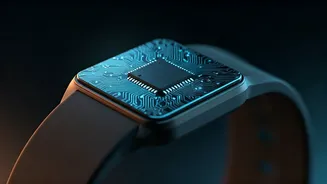
The potential applications of stretchable OLEDs are vast and exciting. In the realm of wearable technology, these screens could be seamlessly integrated into clothing, accessories, and other devices. They could provide dynamic displays on smartwatches, fitness trackers, and even embedded displays on skin. In the field of medical technology, stretchable OLEDs could be used to create flexible sensors. The flexibility enables them to conform to the body and monitor vital signs. The screens can also be integrated into interactive surfaces, opening new avenues for user interfaces and immersive experiences. From virtual reality to automotive displays, the versatility of these flexible screens suggests that the future of display technology will be shaped by its ability to bend, stretch, and adapt to any environment.