






Dance and Robots
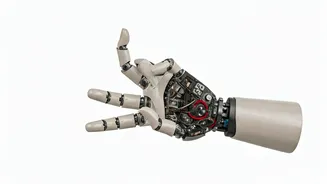
Researchers are investigating the application of Indian dance mudras, which are specific hand gestures, in the control of robotic hands. These intricate
movements, rooted in classical Indian dance traditions, involve a wide range of hand positions and gestures that convey meaning and tell stories. The study aims to translate these complex hand movements into a control system for robotic hands, thereby enabling them to perform a greater variety of tasks with enhanced precision and dexterity. The concept bridges ancient art forms with cutting-edge technology, potentially redefining how robots interact with the world and perform complex manipulations. The research team is hoping that by studying and replicating the nuances of human hand movements as demonstrated in these dance forms, they can develop more versatile and capable robotic systems.
Mudras: The Language
Mudras, the codified hand gestures in Indian classical dance, are far more than just aesthetic movements; they function as a language. Each mudra signifies a particular concept, emotion, or object. Classical dancers master these gestures to narrate stories, convey feelings, and communicate with the audience without using words. These gestures are incredibly detailed and incorporate precise finger placements and hand orientations. This complexity is what makes them potentially ideal for training and controlling robotic hands. By analyzing and digitally encoding these gestures, scientists hope to enable robots to reproduce complex movements in a manner that is currently impossible. This technology has the potential to enhance robotic manipulation capabilities, making them useful in many fields, from healthcare to manufacturing.
Dexterity in Action
The research's goal is to improve the dexterity and functionality of robotic hands, which is a major challenge in robotics. Current robotic hands often lack the intricate movement capabilities of human hands, making it difficult for them to perform complex tasks. By learning from the precision and variety of mudras, researchers are working to develop robotic hands that can manipulate objects with a level of agility and sophistication not yet achieved. This involves designing algorithms that can recognize and replicate the intricate patterns of mudras, allowing the robotic hands to emulate human movements more accurately. Successful implementation of this approach could result in robotic systems that are better equipped to handle diverse tasks, ranging from surgery to delicate assembly work.
Study's Implications
This research could have broad implications for the field of robotics. Improved robotic hand control would facilitate automation in various sectors, increasing productivity and efficiency. In the healthcare sector, this technology could revolutionize surgical robots, enabling procedures with greater precision and smaller incisions, which can result in faster patient recovery. Beyond healthcare, it could also influence manufacturing, logistics, and space exploration, where precision manipulation is crucial. The insights derived from studying Indian dance mudras might also contribute to the creation of more intuitive and user-friendly interfaces for controlling robots. The blending of ancient artistic expression with modern technological development provides a unique and innovative approach to solving one of robotics' most difficult problems.
Advancements in Robotics
This innovative application of Indian dance mudras is not just an academic exercise but a practical step towards creating more advanced and versatile robotic systems. The potential to enhance robotic hand dexterity opens the door for robots to perform tasks that currently require human intervention. This could include tasks that demand delicate manipulation, such as assembly or maintenance, or those carried out in hazardous or remote environments. The project is a testament to the creative interplay of diverse disciplines, where artistic expression intersects with engineering innovation, and can lead to a future where robots are more integrated into various aspects of human life. The successful implementation of these ideas could have transformative impacts on multiple industries, from healthcare to manufacturing.