



Unveiling the Nebula
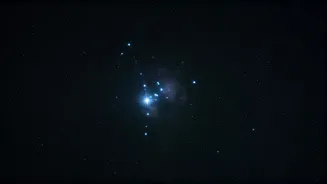
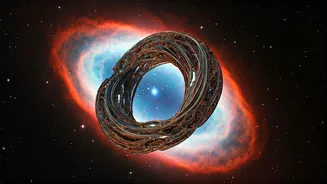
The Ring Nebula, a celestial marvel easily spotted through telescopes, has long been a subject of fascination for astronomers. This nebula, classified
as a planetary nebula, marks the final stage of a Sun-like star's life. Planetary nebulae are formed when a dying star ejects its outer layers into space, creating a luminous cloud that surrounds the remnant core. These nebulae are crucial for understanding the life cycle of stars because they are where elements created within stars are scattered throughout the cosmos. Observing the Ring Nebula lets scientists study how these elements, including heavier ones like iron, are distributed and interact within a cosmic environment. The beauty of these nebulae also helps to show the dynamics of stellar evolution.
The Iron Discovery
Using advanced observational techniques, astronomers uncovered a massive, iron-rich structure within the Ring Nebula. This feature was not visible in earlier observations and revealed itself through specialized imaging that emphasized the presence of iron atoms. The detection of iron is especially significant because it is a relatively heavy element, formed in the later stages of a star's life. The observation of this iron-rich structure indicates that significant amounts of iron were created within the progenitor star and were subsequently ejected into the nebula. This provides crucial information about the type of star that created the Ring Nebula and its evolutionary history. This surprising discovery raises questions about how iron is distributed and what its role is in the nebula’s ongoing evolution.
Formation Theories
The discovery has led scientists to re-evaluate existing models of planetary nebula formation. One leading theory suggests that the iron-rich structure may be related to the star's previous mass-loss episodes or perhaps is the result of interaction between the stellar wind and previously ejected material. Another theory speculates that the iron could have been created by a late thermal pulse, an event that can occur near the end of a star's life, leading to the synthesis of heavier elements. These theories are being tested by comparing the observed iron distribution with theoretical models of stellar evolution and nebula formation. Different observations and computer simulations could offer more understanding on the complex interactions that shaped the Ring Nebula's interior. This will offer further insights into the life cycles of stars.
Impact on Research
This finding could reshape how scientists study planetary nebulae. By studying the distribution and characteristics of elements like iron, astronomers can infer critical details about the progenitor star's properties, including its mass, chemical composition, and evolutionary stage. The detection of this massive iron-rich structure opens new avenues for exploring the inner workings of nebulae. Future research may focus on obtaining even more detailed images and spectroscopic data of the Ring Nebula to further map the iron distribution and explore other elements. The data gathered would then be compared with advanced simulations to refine our models of nebula formation and stellar evolution. This discovery gives a way to understand the complex interactions and processes within these celestial objects and the life cycle of stars.
Future Observations
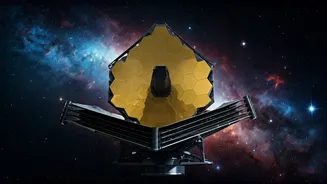
The implications of this discovery are driving new observational initiatives. Astronomers plan to utilize the next generation of telescopes, such as the James Webb Space Telescope, to investigate the Ring Nebula in greater detail. These instruments offer unparalleled sensitivity and resolution, allowing scientists to probe the nebula's inner structures with extraordinary precision. Further observations would provide critical data on the composition, dynamics, and evolution of the iron-rich component. Moreover, researchers aim to study other planetary nebulae to see if similar iron-rich features are present, which could show this is a common part of stellar evolution. These new observations will help validate models of the nebula's formation and, more broadly, deepen our comprehension of the cosmic processes that shape our universe.