








Faster-Than-Light Travel
The concept of traveling faster than the speed of light, as depicted in many sci-fi stories, remains a significant challenge. Einstein's theory of relativity
presents significant hurdles, asserting that nothing with mass can reach the speed of light, let alone surpass it. While concepts like warp drives and wormholes offer potential solutions in theory, they face massive obstacles such as requiring exotic matter with negative mass-energy density, which scientists have yet to discover. The energy requirements for these modes of transport would also be unbelievably high, far beyond our current capabilities. Furthermore, the effects of time dilation at such speeds could dramatically alter the experience of travel, creating more questions than answers at this stage.
Artificial Intelligence
Artificial intelligence, a common trope in sci-fi, is rapidly advancing. We see AI in many forms now, from smart assistants to complex algorithms. While current AI excels at specific tasks, true artificial general intelligence (AGI), with human-level cognitive abilities, remains elusive. The development of AGI requires breakthroughs in understanding consciousness, learning, and reasoning. There are also ethical considerations, like ensuring AI aligns with human values and preventing unintended consequences. Moreover, the integration of AI into daily life raises questions about job displacement, privacy, and control, that are under constant debate and revision.
Space Exploration & Colonization
Space exploration and potential colonization are also popular sci-fi themes. Rockets, advanced space stations, and the exploration of other planets are becoming more achievable. Companies such as SpaceX are making space travel more accessible, and missions to Mars are actively planned. However, colonizing other planets presents considerable hurdles. Issues such as dealing with the environment (radiation, temperature extremes), creating self-sustaining ecosystems, and the psychological impact of long-duration space travel must be solved. The vast distances and high costs associated with space exploration and colonization are major obstacles, yet, the dream continues to drive innovation and discovery.
Teleportation
The instantaneous movement of objects or people, called teleportation, is a staple of sci-fi. However, the laws of physics currently pose major challenges. To teleport something, one would need to scan an object, break it down into its constituent particles, transmit that information, and then reassemble the object at a different location. This process would require massive amounts of energy and sophisticated technology that we don’t possess. Furthermore, the act of dismantling and reassembling a human at the quantum level raises significant ethical and practical questions, though research continues in related areas like quantum entanglement, which could one day support some form of long-distance data transmission.
Robots and Androids
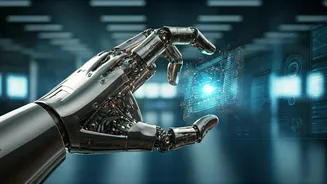
Robots and androids, often portrayed as highly intelligent and human-like in sci-fi, are another interesting possibility. Robotics technology has advanced significantly, with robots performing complex tasks in manufacturing, healthcare, and exploration. However, creating robots with the dexterity, intelligence, and emotional capacity of humans is difficult. Challenges include replicating human-like movement, developing robust sensory systems, and programming complex decision-making processes. Moreover, ethical considerations regarding robot rights, autonomy, and potential for misuse are important factors in ongoing research and development in this area.
Time Travel
Time travel has fascinated generations of sci-fi fans. While mathematically possible within the framework of general relativity, practical time travel faces major hurdles. Building a time machine might require manipulating gravity, creating wormholes, or traveling at speeds close to the speed of light, which are all technologically difficult. Furthermore, the potential paradoxes that could arise, such as altering the past and changing the present, present serious theoretical problems. The laws of physics, such as the conservation of energy, make time travel a complex concept to consider, but many scientists still explore its theoretical possibility.
Genetic Engineering
Modifying an organism's genes, as seen in sci-fi, is increasingly becoming reality. Techniques such as CRISPR gene editing allow scientists to alter DNA with unprecedented precision. This technology holds great potential for treating genetic diseases, enhancing crop yields, and modifying organisms for various purposes. However, genetic engineering also presents ethical concerns, including potential unintended consequences, the use of genetic modifications for non-medical enhancements, and the possibility of creating biological weapons. Safety regulations, ethical guidelines, and societal discussions are essential for responsible innovation in this evolving area.
Cybernetics
The integration of technology and human bodies, called cybernetics, is another developing field. While sci-fi often depicts advanced cybernetic implants providing superhuman abilities, current technology focuses on simpler applications. Artificial limbs, cochlear implants, and other devices are transforming lives. Advancements in materials science, miniaturization, and biocompatibility could lead to more sophisticated interfaces between humans and machines. However, concerns about security, accessibility, and the potential for widening social disparities must be addressed as cybernetic technologies become more advanced and integrated into our lives.
Force Fields
Force fields, which deflect projectiles and provide protection, are a science fiction staple. While true force fields remain beyond our current capabilities, research into defensive technologies has created some interesting possibilities. Scientists are studying methods for shielding objects from radiation and developing advanced materials with unique properties. Active camouflage and cloaking devices, which can alter an object's appearance to blend with its surroundings, are being actively researched. However, creating an invisible and impenetrable barrier capable of stopping a wide variety of threats is still in the realm of science fiction.
Mind Control
The ability to control another person's thoughts and actions, as seen in sci-fi, is both intriguing and unsettling. While mind control as portrayed in fiction remains scientifically unproven, there are emerging technologies that interact with the brain. Brain-computer interfaces (BCIs) allow direct communication between the brain and external devices. These technologies have potential applications in treating neurological disorders, controlling prosthetics, and enhancing cognitive function. However, the ethical implications, privacy concerns, and potential for misuse of such technologies pose significant challenges, requiring careful consideration and regulation.