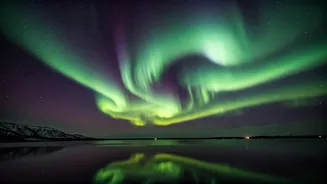

Solar Maximum Influence
The upcoming peak in the solar cycle, known as the solar maximum, is a crucial factor in the anticipated increase in aurora borealis visibility. The sun's
activity fluctuates in an approximately 11-year cycle. During the solar maximum, the sun's magnetic field becomes more complex, leading to an increase in solar flares and coronal mass ejections (CMEs). These events release vast amounts of charged particles that travel through space and, upon interacting with Earth's magnetic field, trigger auroral displays. The energy released by solar flares and CMEs is what ultimately causes the vibrant light shows we observe as the Northern Lights. The enhanced activity during the solar maximum directly correlates with heightened auroral displays.
Post-Solar Maximum Storms
Following the solar maximum, the post-solar maximum period can be particularly interesting for aurora enthusiasts. This is because, while the sun's overall activity might begin to decline slightly, the conditions can be ripe for generating strong geomagnetic storms. The release of energy and charged particles can still be significant, leading to intense auroral displays that may extend to lower latitudes. These post-solar maximum periods offer a unique chance to observe the Northern Lights more frequently and at locations that typically do not experience them often. Therefore, the conditions immediately after a solar maximum are highly conducive to producing impressive auroras.
Geomagnetic Storms Explained
Geomagnetic storms, caused by the interaction of the solar wind with Earth's magnetosphere, are the engine behind the auroral displays. When powerful CMEs reach Earth, they can compress the magnetosphere, resulting in an influx of charged particles into the upper atmosphere. These particles then collide with gases like oxygen and nitrogen, exciting the atoms and causing them to emit light. The colors of the aurora depend on the type of gas and the altitude at which the collisions occur. Oxygen produces green and red hues, while nitrogen creates blue and purple shades. Strong geomagnetic storms are associated with more vibrant and widespread auroras, creating awe-inspiring visual effects.
Impact on Satellite Signals
While the prospect of dazzling auroras is exciting, increased solar activity can also pose risks. Geomagnetic storms can interfere with satellite communications and navigation systems. The Earth's ionosphere, a layer of the upper atmosphere, becomes charged during these storms, which disrupts the signals used by satellites. This can affect GPS, communication satellites, and other technologies that rely on precise positioning and data transmission. Satellites can also experience increased drag from the denser atmosphere during solar storms, potentially affecting their orbits. Understanding and predicting solar storms are crucial for mitigating their potential impact on technology.
Viewing Tips for 2026
To maximize your chances of witnessing the Northern Lights in 2026, it is helpful to be prepared. Check aurora forecasts, which provide real-time updates on auroral activity. Choose viewing locations away from light pollution, ideally with clear northern horizons. The ideal viewing times are typically during the night hours, when the sky is dark. Be patient, as auroras can be unpredictable. Have a camera with appropriate settings to capture the light show if you have one. Also, consider traveling to locations known for frequent auroral displays, such as Alaska, Canada, Iceland, or Scandinavia. Keep an eye on geomagnetic indices, which can help anticipate the intensity of the auroras.