






The AI Imperative
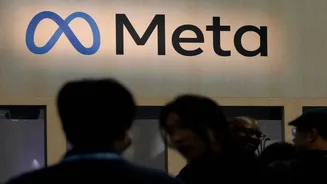
In a significant strategic pivot, Meta has initiated a broad internal restructuring that involves both workforce reductions and reassignments, with a substantial
portion of its employees affected. This overhaul is primarily driven by the company's accelerated investment in artificial intelligence. The goal is to embed AI agents across Meta's product ecosystem and fundamentally reshape how work is conducted internally. This strategic realignment aims to create more agile, AI-powered workflows, leading to flatter organizational designs and smaller, more focused teams. These changes signal a deliberate move towards a future where AI plays a central role in Meta's operational and product development strategies, a trend mirroring similar AI-focused shifts in the broader tech industry. Approximately 20% of the company's total workforce is subject to these combined layoff and transfer actions, underscoring the magnitude of this internal transformation.
Workforce Realignment
The company's restructuring plan involves the direct elimination of approximately 10% of its global workforce, with further reductions anticipated later in the year. In parallel, Meta is transferring around 7,000 employees to newly established initiatives focused on enhancing AI workflows and productivity. This transfer process, sometimes referred to internally as 'drafting,' is a key component of the organizational redesign. Managerial positions are also being impacted, contributing to a broader effort to create leaner operational structures. Some employees have already been notified of their transfers or departures, while others are slated to receive information on the designated layoff day. To facilitate these changes, employees in North America were instructed to work remotely on the day of the initial announcements, allowing for a more controlled and private communication of these significant workforce adjustments. The company has also concurrently closed down roughly 6,000 previously open positions as part of this comprehensive workforce management strategy.
New AI Initiatives
The transfers are primarily directed towards emerging AI-focused teams designed to advance the company's 'AI for Work' agenda. Two prominent initiatives include Applied AI Engineering (AAI) and Agent Transformation Accelerator (ATA) XFN. These teams are tasked with developing sophisticated AI agents capable of autonomously executing tasks that are currently handled by human employees. Another destination for reassigned personnel is Central Analytics, a division dedicated to measuring productivity and refining the development of these AI agents. While details on another new initiative, Enterprise Solutions, are forthcoming, the scope of these AI-driven projects indicates a deep commitment to integrating intelligent automation into Meta's core operations. These efforts aim to boost efficiency, foster innovation, and redefine the nature of employee contributions within the organization.
Employee Reactions
These substantial organizational shifts have ignited considerable unrest among Meta's employees. Protests have manifested through internal communications, including flyers distributed within company offices and vociferous discussions on the internal platform, Workplace. A significant number of employees, exceeding 1,000, have lent their support to a petition that criticizes the implementation of mouse-tracking software. This technology is being utilized to train Meta's artificial intelligence models by capturing human interaction patterns with computers. Furthermore, some employees have directly challenged company leadership on internal forums, expressing their dissatisfaction with executives' responses to privacy concerns surrounding the tracking technology and their perceived silence regarding the layoff plans. This silence occurred for over a month after initial reports of the impending reductions, leading to frustration and a sense of uncertainty among the workforce.