







The Plastic Predicament
Our world is drowning in plastic, a material designed for single use yet persisting for centuries. Derived from non-renewable fossil fuels, conventional
plastics contribute massively to landfill waste and environmental pollution, oceans bearing the brunt of this accumulation, evidenced by vast garbage patches. Despite recycling efforts, a mere 9% of plastic is effectively processed, leaving the vast majority to fragment into insidious microplastics and nanoplastics. These microscopic particles permeate our environment, are inhaled and ingested by both wildlife and humans, and their long-term health implications remain largely unknown, posing a significant and growing global concern that demands immediate innovative solutions.
From Waste to Wonder
Driven by a passion to combat the escalating plastic crisis, Srinivas Janaswamy, an associate professor at South Dakota State University, is spearheading research into converting agricultural byproducts into valuable materials. His focus is on finding practical applications for biowaste, aiming to create high-value alternatives to petroleum-based plastics. Retail plastic bags, notorious for their single-use nature and frequent contribution to litter, are a primary target of his work. Janaswamy envisions a future where packaging, particularly items like plastic bags, can safely and rapidly decompose after disposal, aligning with his personal ambition to create truly biodegradable alternatives that benefit both consumers and the environment.
Cellulose: Nature's Foundation
The core of Janaswamy's innovative approach lies in cellulose, the most abundant organic polymer on Earth, forming the structural backbone of plant cell walls. This complex molecule, composed of long glucose chains linked by robust hydrogen bonds, imparts significant strength and rigidity to plants. Humans have utilized cellulose for millennia, notably in materials like cotton for clothing and wood for construction. Previous research by Janaswamy demonstrated the successful extraction of cellulose from a diverse array of agricultural waste, including items like avocado peels, soyhulls, alfalfa, switchgrass, spent coffee grounds, corncob, and banana peels. This extracted cellulose was then ingeniously fashioned into thin, transparent films that closely resemble conventional plastic wrap in both texture and appearance.
Grapevine's Green Potential
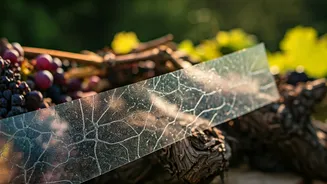
A pivotal moment in Janaswamy's quest came when Anne Fennell, a distinguished professor specializing in grapevine research, recognized a powerful connection between Janaswamy's work and agricultural waste. Fennell identified grapevine canes, the woody stems crucial for grape cultivation, as a rich source of cellulose. These canes are produced in large volumes annually and have limited post-harvest utility. Fennell noted that while many of Janaswamy's previous sources had high water content, winter-pruned grapevine canes offer a cellulose-dense material with low moisture, making them an ideal and readily available resource. This synergistic insight sparked a collaboration, leading Janaswamy to extract cellulose from these canes, yielding films that surpassed initial expectations.
Remarkable Biodegradable Films
Published research in Sustainable Food Technology highlights the remarkable properties of films derived from grapevine canes. These materials exhibit exceptional transparency, crucial for consumer appeal and product inspection in packaging, and possess impressive mechanical strength. Astonishingly, when introduced into soil environments, these films completely biodegrade within a mere 17 days, leaving behind no detrimental residues. This rapid decomposition rate offers a stark contrast to conventional plastics, which persist for centuries. Rigorous testing confirmed that the grapevine-based films demonstrate superior tensile strength compared to conventional plastic bags, positioning them as a viable and environmentally superior alternative for a variety of packaging needs, including food applications.
Sustainability in Practice
The utilization of underappreciated grapevine prunings for creating packaging films represents a significant advancement in waste management and a tangible contribution to alleviating global plastic pollution. This research, conducted by a dedicated team including doctoral candidates Sandeep Paudel and Sumi Regmi, along with graduate Sajal Bhattarai, followed a systematic process of drying, grinding, cellulose extraction, dissolving, and casting. The development of these eco-friendly films from grapevine cellulose embodies a practical strategy for sustainability, contributing to resource conservation and fostering a circular bioeconomy. This breakthrough brings Janaswamy closer to his ultimate goal of developing a readily degradable, plastic-like bag that can safely vanish from the environment after use.