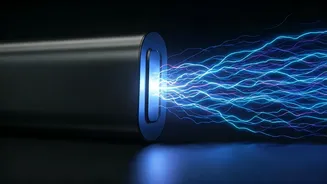









Dream Battery Concept
Researchers are investigating the use of magnetic fields to control lithium, a critical component in many modern batteries. The primary goal is to develop
a 'dream battery' that addresses the safety concerns associated with current lithium-ion batteries. The risk of explosions is a significant drawback in lithium-ion technology, and this new approach aims to eliminate this risk entirely. The concept relies on using magnetic forces to regulate the movement and behavior of lithium atoms within the battery structure, thus preventing the conditions that lead to thermal runaway and explosions. This innovation could have profound implications for the Indian market, especially with the growing need for electric vehicles, and renewable energy storage.
Magnetic Field's Role
The core of this research involves applying magnetic fields to precisely manipulate lithium ions. These magnetic fields influence the way lithium ions interact and move within the battery's structure. By controlling their behavior, scientists can prevent the formation of dendrites, which are needle-like structures that can cause short circuits and explosions. Moreover, this control potentially allows for greater energy density, meaning more power can be stored in the same physical space. This also means that the development of battery technology could have advantages such as longer battery life and reduced need for frequent charging. This could be beneficial for both consumers and businesses across India.
Enhanced Safety Measures
The primary advantage of magnetic control is the improved safety profile of the batteries. Traditional lithium-ion batteries are prone to thermal runaway, a chain reaction that can cause explosions and fires. Magnetic control aims to remove the conditions that trigger thermal runaway. This is achieved by creating a more stable and controlled environment for the lithium ions. The use of magnetic fields helps to prevent the internal short circuits, dendrite formation, and overheating that typically lead to battery failures. Safer batteries are extremely important, especially for the widespread adoption of electric vehicles and the deployment of energy storage systems in homes and businesses in India.
Increased Capacity Potential
Besides enhanced safety, magnetic control could also lead to a substantial increase in battery capacity. Researchers believe that by precisely controlling the movement of lithium ions, they can pack more energy into a battery of a given size. This increase in energy density translates to longer battery life and improved performance. For example, electric vehicles could have a greater range on a single charge. Furthermore, in the context of renewable energy, larger capacity batteries would allow for more effective storage of solar and wind power, helping to integrate these sources into India's energy grid. This means a more efficient use of resources and a reduction in reliance on fossil fuels.
Future Indian Applications
The advancements in magnetic-controlled lithium batteries hold significant promise for various sectors in India. The electric vehicle industry is set to benefit greatly, with the potential for safer, longer-lasting batteries that improve vehicle range and charging times. The renewable energy sector could also see huge advantages, as increased battery capacity makes it easier to store excess solar and wind energy. Also, this innovation could be used to improve the energy storage capacity in home and businesses, reducing the dependence on the national grid and promoting energy independence. Further research and development would be key for translating this technology into practical applications.
Overcoming Challenges
While the technology is promising, there are several hurdles to address before magnetic-controlled batteries become a reality. One of the main challenges is the need to develop efficient and cost-effective methods for generating and controlling the magnetic fields within the battery. Ensuring the longevity and stability of the battery under various operating conditions is also critical. Scaling up the production process to meet the needs of the market would be another challenge, as the existing infrastructure may need adjustments. Overcoming these challenges will require collaborative efforts among scientists, engineers, and manufacturers in India, and the potential benefits are worth pursuing.