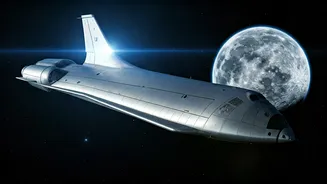







A Historic Mission
NASA's Artemis II mission is poised to be a significant event in space exploration. The launch window, set for February 2026, represents a pivotal moment
in the agency's goals to revisit the Moon with human presence. This mission is particularly noteworthy as it will mark the first crewed lunar flyby in over 50 years. The Artemis program aims to establish a sustainable presence on the lunar surface, paving the way for future missions to Mars. The mission's success depends on the meticulous preparations and the advancements in technology achieved through the Artemis program. The mission signifies a leap forward in humanity's quest to understand and explore the cosmos, building upon decades of scientific research and technological innovations.
Astronauts Prepare
Astronauts are actively engaged in rigorous training and preparations for the Artemis II mission. This includes extensive simulations, practice in spacecraft systems, and exercises designed to familiarize them with the challenges of deep-space travel. The crew's training involves every aspect of the mission, from launch and navigation to the complex procedures required for the lunar flyby. These astronauts are pioneers, representing a new generation of space explorers ready to venture into deep space. Their dedication and expertise are crucial for the mission's success, making them essential figures in this historic endeavor. Their preparedness will be continuously assessed and refined as the launch date draws near, ensuring they are fully equipped for the journey.
Why Timing Matters
The timing of the Artemis II launch window, specifically February 2026, is crucial for various reasons. The launch window is determined by factors such as the positions of the Earth, the Moon, and the sun, ensuring optimal conditions for the mission's trajectory and fuel efficiency. The timing also impacts mission duration, as it influences the amount of time the crew spends in space and the overall challenges they face. Accurate timing is critical for the success of the mission, as it influences factors such as lighting conditions on the Moon's surface during the flyby and the ability of the spacecraft to communicate with ground control. Therefore, the launch window reflects NASA's meticulous planning and commitment to a safe and successful mission.
Deep Space Exploration
The Artemis II mission signifies a renewed commitment to deep-space exploration, carrying on the legacy of the Apollo missions while embracing modern technology. The mission will serve as a valuable test of the systems and procedures that will be employed in future deep-space missions. The lunar flyby is an essential step towards establishing a permanent presence on the Moon and will offer valuable insights into the effects of space travel on the human body. The mission will provide new opportunities for scientific discovery, allowing researchers to study the Moon's geology, environment, and potential resources. The Artemis II mission is a crucial step towards the ambitious goal of sending humans to Mars, solidifying space exploration's future.