





Lunar Mission Delayed
The highly anticipated Artemis II mission, which aims to mark humanity's return to lunar proximity after a five-decade hiatus, has encountered a setback.
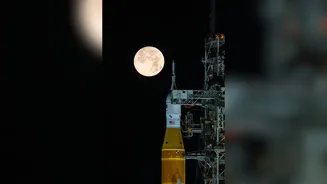
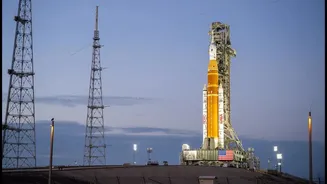
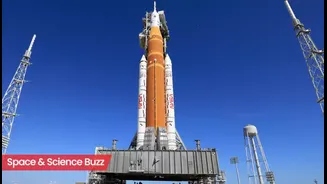
Originally slated for an earlier launch, NASA has confirmed that the mission will now commence no earlier than April 2026. This postponement stems from an issue identified during the Space Launch System (SLS) rocket's second wet dress rehearsal. Specifically, engineers detected a problem concerning the flow of helium to the rocket's upper stage. This technical hurdle requires the colossal rocket to be carefully transported back from its current position on the launchpad at the Kennedy Space Center in Florida to the Vehicle Assembly Building (VAB). This extensive four-mile journey is scheduled to commence on Tuesday, February 24, as stated by NASA's recent confirmations. The previous target date of March 6 has been officially superseded by this new outlook, underscoring the meticulous approach NASA is taking to ensure mission success.
Technical Glitch & Rollback
The recent discovery of an anomaly with the helium flow system on the SLS rocket's upper stage has mandated a significant logistical step: transporting the massive spacecraft back to the Vehicle Assembly Building. This decision was made after engineers thoroughly assessed the issue, determining that a return to the VAB was essential for remediation. The rollback process, a complex maneuver covering a distance of four miles, is a critical part of ensuring the rocket's integrity and readiness. NASA's proactive decision to initiate this rollback, planned for February 24, is seen as a strategic move to safeguard the mission's timeline and potentially preserve the April launch window. The agency emphasized that this quick action aims to allow for thorough inspection and repair, pending the comprehensive analysis of data gathered and the successful completion of the necessary corrective actions in the coming weeks.
Crew and Mission Scope
While the rocket undergoes its necessary preparations, the four-person crew for Artemis II remains in good spirits and readiness. The team, comprised of NASA astronauts Victor Glover, Reid Wiseman, and Christina Koch, alongside the Canadian Space Agency's Jeremy Hansen, had recently concluded their quarantine period on Saturday evening. They are currently based at NASA's facility in Houston, Texas, maintaining their training regimen. The Artemis II mission itself is designed as a vital precursor to future lunar landings. It involves the astronauts embarking on a 10-day journey where they will meticulously test and evaluate the advanced systems of the Orion spacecraft as they traverse the lunar vicinity. The successful completion of these tests is paramount, as it directly paves the way for the ambitious Artemis III mission, which aims to land humans back on the lunar surface before the end of the present decade. NASA has also shared a detailed video outlining the projected flight path and key stages of this historic mission.