





Massive Funding Injection
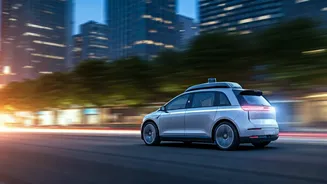
The self-driving car pioneer, Waymo, has successfully garnered a substantial $16 billion in new funding. This significant financial influx is strategically
designed to propel the company's mission to extend its autonomous ride-hailing services across the globe. This latest round of investment values Waymo at an impressive $126 billion, a testament to investor confidence in the burgeoning robotaxi market. It highlights Waymo's remarkable growth since its inception as an experimental project within Google 17 years ago. Just five years prior, analysts estimated Waymo's worth to be around $30 billion, underscoring the rapid acceleration of its valuation and market presence. This substantial funding may also fuel ongoing discussions about Waymo's potential future as a publicly traded entity, possibly through a spin-off from its parent company, Alphabet Inc.
Global Expansion Strategy
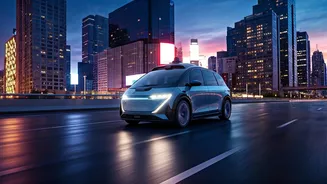
With this substantial capital infusion, Waymo intends to significantly broaden its operational footprint beyond the six metropolitan areas where its driverless vehicles currently operate, spanning California, Arizona, Georgia, Texas, and Florida. The company is actively preparing to launch its services in more than 20 additional cities, with international destinations like London and Tokyo on the horizon. This expansion is crucial as Waymo aims to scale its existing operations, which already facilitate over 400,000 rides weekly. The company emphasizes its readiness to proceed with 'unprecedented velocity' while upholding its commitment to industry-leading safety standards, a critical factor for public trust and regulatory approval in the evolving autonomous transportation landscape.
Navigating Challenges
Despite its advancements and a generally positive safety record, Waymo's robotaxis have encountered notable incidents that have attracted public scrutiny and regulatory attention. In San Francisco, a past event involved a Waymo vehicle causing an accident that tragically resulted in the death of a beloved neighborhood cat. Furthermore, during a widespread power outage, several of the company's autonomous vehicles stalled in intersections, contributing to traffic disruptions. The National Transportation Safety Board is also investigating reports in Austin, Texas, concerning instances where Waymo vehicles were perceived to be operating in an unsafe manner in close proximity to school buses carrying children. These events underscore the complexities and ongoing challenges in ensuring the safe and reliable operation of autonomous vehicles in diverse urban environments.
Competitive Landscape
The autonomous ride-hailing sector is witnessing escalating competition, with Waymo facing increasing pressure from formidable rivals. Companies like Amazon-backed Zoox are actively developing their robotaxi services, particularly in San Francisco, aiming to capture a significant share of the market. Additionally, Tesla continues its pursuit of CEO Elon Musk's vision for a widespread network of autonomous taxis across the United States. Waymo's substantial investment and expansion plans position it to contend with these evolving competitive dynamics, as all players strive to establish dominance in this rapidly advancing technological frontier.