




Hubble's Celestial Gaze
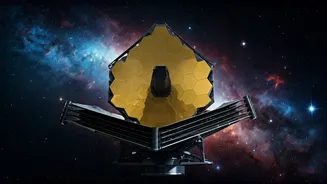
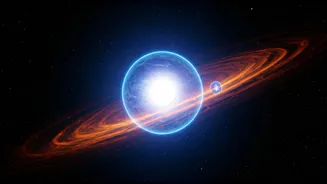
The Hubble Space Telescope, a marvel of engineering, continues to unravel the mysteries of space, as it detected the wake of Betelgeuse's hidden companion
star. This discovery validates a previously unproven concept within the scientific community, giving concrete proof to the existence of a star alongside Betelgeuse. This is just one of many breakthroughs the Hubble Telescope has brought to the field of astronomy, constantly expanding our knowledge of the universe, galaxy by galaxy. The telescope's capabilities include observing everything from neighboring planets to distant galaxies and the remnants of the earliest times of the cosmos.
Betelgeuse's Companion Star
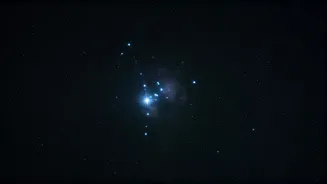
The discovery of a companion star to Betelgeuse represents a significant achievement. This confirmation provides evidence that Betelgeuse is not a lone entity but rather part of a binary or multi-star system. The Hubble Telescope's capacity to recognize the faint presence of this hidden companion, even though it is hard to detect, underlines its exceptional observation skills. This discovery has great importance for astronomers as they study stellar evolution and the behaviors of massive stars nearing the end of their lives. Betelgeuse is well-known for being a red supergiant and is thought to be ready to go supernova, which will make it an astonishing celestial event.
Confirming Long-Held Theory
The Hubble Telescope's observations not only identified a companion star but also confirmed a long-held scientific theory. Previously, the existence of a companion star was an educated idea based on theoretical models and indirect evidence. However, direct observation by the Hubble Space Telescope provided definitive proof, changing the existing theories and giving scientists a clearer view of Betelgeuse's nature. Validating these models boosts confidence in the way astronomers study stellar behaviors and create more precise predictions about the life cycle of stars.
Implications and Future
The identification of Betelgeuse's companion star has important ramifications for stellar research. The understanding of Betelgeuse's behaviors, including its luminosity changes and anticipated supernova, can be improved by knowing that it has a companion star. Astronomers can refine their models and make more precise predictions about the timelines and processes of these massive stars. As the Hubble Telescope keeps gathering data and adding to our astronomical knowledge, scientists look forward to deeper understandings of the universe, its formation, and its future. This finding also shows how important space-based observations are in providing a unique perspective on the cosmos.