






Amodei's Stark Prediction
The rapid advancement of artificial intelligence has ignited a significant debate about its effect on the global workforce, with prominent voices offering
starkly different prognoses. Dario Amodei, the CEO of Anthropic, has voiced considerable apprehension, forecasting that AI is poised to eliminate a substantial portion of entry-level white-collar positions within the next one to five years. He elaborates on this by suggesting that AI could become more capable than all human workers in as little as one to two years. This prediction is particularly resonant given recent economic indicators, such as the Bureau of Labor Statistics' report showing U.S. job openings falling to their lowest point since September 2020, which lends credence to the idea that AI-driven changes might arrive sooner and with more disruptive force than anticipated. Amodei's concerns are rooted in the unprecedented speed of AI development, which he argues distinguishes it from previous technological revolutions, potentially making the period of adaptation exceptionally challenging for employees worldwide. He views AI not merely as an automation tool for specific tasks but as a comprehensive substitute for human labor across a wide spectrum of professions, from law and finance to consulting.
Levie's Optimistic Counterpoint
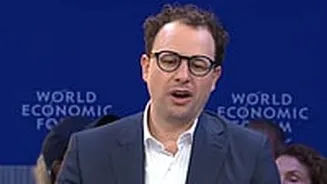
Offering a significantly more encouraging perspective, Aaron Levie, the CEO of Box, contends that the very AI technologies Amodei warns about could, in fact, lead to an expansion of opportunities, particularly for skilled professionals. Levie posits that as AI tools dramatically enhance the productivity of experts, enabling them to achieve output increases of an order of magnitude, the demand for these highly capable individuals is likely to grow, not diminish. He uses the field of software engineering as a prime illustration. Historically, many companies found it prohibitive to hire extensive engineering teams due to the limited impact of a single engineer. However, with AI agents capable of boosting an engineer's productivity by five to ten times, the economic feasibility of building robust software development teams improves considerably for a far greater number of organizations. This, Levie believes, will democratize access to engineering talent, extending it into sectors that previously lacked the resources or expertise to employ such professionals. This effect is not expected to be confined to the technology sector alone, as IT departments will likely require more engineers to manage automated workflows, pharmaceutical companies will need more software talent for intricate data analysis, and even traditional manufacturing will see increased demand for digital engineering expertise as products become more integrated with technology. Furthermore, he suggests that small startups will gain the capability to develop sophisticated software solutions that were previously out of reach.
Expanding Expertise's Reach
Aaron Levie extends his argument beyond the realm of engineering, highlighting how AI's impact could foster increased demand for specialized skills across various creative and professional domains. In creative fields like video production, Levie suggests that the reduced cost of production, enabled by AI, could paradoxically lead to a greater need for top-tier talent. As high-quality content creation becomes more accessible, there may be a surge in demand for skilled editors and directors to produce more sophisticated and engaging material. Similarly, he anticipates that the legal profession could experience an upswing in the requirement for specialized expertise. As AI tools facilitate the creation of more complex and nuanced legal contracts, the need for experienced legal professionals to navigate and manage these intricate documents is likely to rise. Levie's overarching message is one of amplified opportunity for those who possess deep knowledge and specialized abilities in their respective fields, concluding that 'There has never been a better time in history to be an expert in your field,' as the demand for profound expertise is projected to ascend significantly due to the transformative capabilities AI introduces.