





Dance and Robots
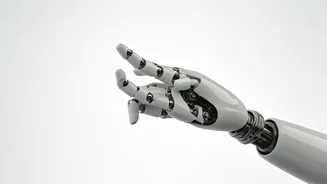
The research, spearheaded by the University of Maryland, Baltimore County (UMBC), centers on the use of traditional Indian dance mudras to inform and enhance
the design and control of robotic hands. Indian dance forms, particularly classical styles, are characterized by elaborate hand gestures (mudras), each with a specific meaning and associated movement. These mudras offer a rich vocabulary of hand configurations and motions that could provide a detailed blueprint for how robots can manipulate objects and perform intricate tasks. By studying the precision and versatility of human hand movements in the context of dance, researchers aim to develop more capable and adaptable robotic hands. The study builds on previous explorations of human-robot interaction, exploring ways to improve the dexterity and functionality of robots.
Mudras: The Key?
Classical Indian dance mudras are not just aesthetic gestures; they are a system of communication and expression. Each mudra represents a specific concept, emotion, or action. This detailed system is what makes it so valuable for robotics. The UMBC study focuses on how the complexity and diversity of mudras can be translated into robotic control systems. The goal is to provide robots with a toolkit of hand motions, thus allowing them to perform a broader range of tasks, from delicate manipulation to more robust interactions. By understanding the underlying principles of these gestures, scientists believe that they can program robots to move more efficiently and naturally. Furthermore, incorporating mudras could give robots the ability to better understand and respond to human commands, creating a more intuitive and collaborative work environment.
Dexterity Breakthrough
One of the primary goals of this research is to enhance the dexterity of robotic hands. Currently, many robots struggle with tasks that humans perform effortlessly. Mudras offer a potential solution to this problem. They provide a precise and systematic approach to hand movement. Researchers are investigating how these patterns can be integrated into robot control systems. The expected result is that robots could handle objects with greater finesse and perform tasks that demand precision. This includes everything from assembly and manufacturing to tasks in healthcare and exploration. Enhanced dexterity also has implications for the development of prosthetic hands and other assistive devices, potentially allowing users to regain a more natural range of motion and capabilities.
Impact and Future
The findings of this research have the potential to significantly impact several fields. In robotics, the incorporation of mudra-based control systems could lead to the development of more versatile and capable machines. In the field of healthcare, this technology might contribute to improved surgical robots and advanced prosthetics. Furthermore, the principles learned from Indian dance could inform the design of more intuitive human-computer interfaces. The research team is working on further research to refine the integration of mudras into robotic systems, aiming to develop algorithms that can learn and adapt to different tasks. The ultimate goal is to create robots that can interact with the world with the skill and grace that is traditionally associated with human movement, drawing inspiration from ancient practices to create cutting-edge technology.