







Forging a Chip Empire
Elon Musk's vision for a self-sufficient AI chip supply is taking concrete form with the "Terafab" initiative. This ambitious undertaking involves establishing
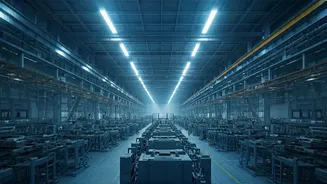
a colossal manufacturing complex, a project that reportedly sees Musk's teams actively engaging with leading global chip equipment suppliers. The goal is to accelerate the creation of this advanced facility, emphasizing a rapid development pace. The endeavor is a joint venture, integrating resources and expertise from both Tesla and SpaceX, signaling a broad application of the chips to be produced. Reports indicate that discussions are underway with major semiconductor industry stalwarts, aiming to secure the specialized machinery essential for sophisticated chip fabrication, a critical step in bringing this large-scale operation to fruition.
Strategic Partnerships Secured
To realize the immense scale of the Terafab project, Musk's team is reportedly forging alliances with several key entities in the semiconductor ecosystem. This includes approaching prominent manufacturers of specialized chip-making equipment, such as Applied Materials, Tokyo Electron, and Lam Research, whose technology is fundamental for etching intricate circuits onto silicon wafers. Furthermore, collaborations are being established with major chip manufacturing firms. Samsung Electronics has been approached to serve as a manufacturing partner, while Intel has confirmed its involvement in producing the processors intended to power Musk's advanced robotics and data center technologies. These partnerships are crucial for acquiring both the state-of-the-art machinery and the manufacturing capabilities necessary to construct and operate such a vast facility.
Accelerated Timelines and Secrecy
True to Musk's reputation for ambitious deadlines, the Terafab project is characterized by a sense of urgency. Staff involved are reportedly seeking swift cost estimates for a wide array of essential manufacturing equipment, from cleaning systems and testing apparatus to etching and deposition machines, all indicative of a drive for rapid procurement and setup. Despite the high pace, the precise nature of the final chips to be produced remains under wraps, with very limited information being shared about their exact specifications. The overarching objective is to commence silicon manufacturing by the year 2029, with plans for rapid scaling thereafter. This blend of accelerated planning and guarded details highlights the strategic importance and proprietary nature of the Terafab's output.
The 'Why' Behind Terafab
The impetus for constructing the Terafab, slated for development on Tesla's campus in Austin, Texas, stems from a critical assessment of existing chip supply capabilities. During a Tesla meeting, Musk articulated that even under optimal conditions, current suppliers like TSMC and Samsung would be unable to meet the projected volume requirements for Tesla's fifth-generation AI chips. He emphasized the necessity of this project, stating it's "giga but way bigger" and the only viable path to achieving the desired chip output. By establishing its own "gigantic" fabrication facility, Musk aims to secure a dedicated and scalable supply chain, thereby mitigating potential bottlenecks caused by global chip shortages and ensuring the unimpeded progress of his company's advanced AI and robotics initiatives.