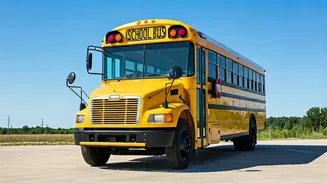








Chrome's Initial Dilemma
In the early days of automotive design, the concept of a universally recognized safety color was still in its infancy. Chrome yellow, a shade of yellow, emerged
as a strong contender. The initial challenge involved agreeing upon a standard color for school buses. The need for a color that stood out and could be easily recognized, even in challenging conditions, was paramount. This was crucial for ensuring the safety of children. This period was marked by discussions among transportation officials, as they sought to establish a system that would prevent accidents. The choice of chrome yellow was intended to serve as a beacon, guiding motorists and increasing the visibility of the buses.
The Rise of Safety
The evolution of safety regulations played a crucial role in cementing yellow as the standard for school buses. Authorities recognized the necessity to improve the visual prominence of school buses on the roads. The focus shifted toward enhancing children's safety. The standardization of the color was not just a design choice; it was a critical step in a broader effort to reduce road accidents. As safety standards developed, the decision was seen as pivotal in setting a consistent visual cue that drivers could easily recognize and respond to. This commitment to safeguarding the lives of children was essential in the widespread adoption of yellow.
Red vs. Yellow Debate
The debate between red and yellow as potential safety colors for school buses illustrates the complexity of choosing the right hue for visibility. Red was a color associated with danger, but it was also widely used for stop signs and traffic lights. Yellow presented a different psychological response, often perceived as a caution signal. During this time, the visibility of each color was tested under various conditions to determine which one provided the best warning effect. The choice of yellow for school buses was partially influenced by its ability to stand out without being associated with the immediate sense of danger linked to red. The decision considered the need for a color that would alert drivers without causing immediate panic.
Why Yellow Prevails
The eventual choice of yellow for school buses was based on a combination of scientific evidence, practical considerations, and safety concerns. It was found that yellow offered superior visibility, particularly in conditions with low light, such as dawn, dusk, and inclement weather. The color’s ability to stand out and capture attention was a significant factor. Furthermore, yellow's widespread adoption was influenced by the availability of paints and pigments. The decision was also a reflection of an overarching desire to protect children as they traveled to and from school. The use of yellow continues to be a crucial element in road safety.
Interesting Yellow Facts
The seemingly simple choice of yellow for school buses opens the door to several fascinating facts and trivia. The precise shade of yellow, such as the now-standard 'National School Bus Glossy Yellow,' is carefully regulated to ensure consistency across different bus manufacturers. Another point is the evolution of paint technology, which has significantly enhanced the durability of yellow paints. It's also worth noting the impact of studies on color perception and how the human eye reacts to various shades of yellow. Even today, there are ongoing studies aimed at optimizing the color for maximum visibility. The shade is constantly evaluated.