
Carbon Sequestration Strategy
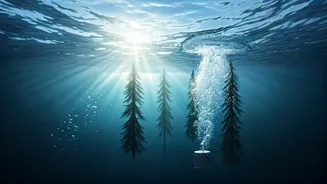
The concept of utilizing boreal trees in the Arctic Ocean stems from a recent study. The fundamental idea is relatively straightforward: boreal trees,
once submerged, could potentially sequester considerable amounts of carbon. The primary mechanism involves the tree's biomass, essentially carbon, being stored within the ocean depths, thereby preventing its release into the atmosphere. This contrasts with terrestrial environments where decomposition or burning can quickly release carbon back into the atmosphere. The Arctic's unique environment, with its low temperatures and limited oxygen at great depths, is considered ideal because it slows down the decomposition process, allowing carbon to be trapped for extended periods. This technique is drawing attention because it could be a significant step toward reversing climate change and has become a subject of considerable interest among scientists and environmentalists.
Arctic Ocean's Role
The Arctic Ocean itself offers several advantages for this carbon sequestration strategy. The cold temperatures found in the deep ocean significantly impede the rate of decomposition. At these extreme depths, oxygen levels are exceptionally low, which further reduces the activity of decomposers. Consequently, the submerged trees are expected to decompose very slowly, ensuring that the carbon they contain remains locked away for extended periods. This characteristic distinguishes the Arctic from other environments where decomposition is faster. Furthermore, the immense scale of the Arctic Ocean provides substantial capacity for storing significant quantities of biomass. This, in turn, allows for the potential removal of billions of tons of carbon annually, making it a very appealing area for carbon capture initiatives. The location's remoteness also presents logistical challenges, but the potential environmental benefits make it a worthy project.
Environmental Impacts Explored
While the prospect of sinking trees in the Arctic Ocean seems promising, scientists are closely evaluating potential environmental consequences. One of the main concerns revolves around the impact on marine ecosystems. Introducing substantial amounts of organic material into the ocean can alter the chemical composition of the water, which in turn might affect the existing marine life. The slow release of nutrients from decomposing trees could disrupt the delicate balance of the Arctic ecosystem. Additionally, there are questions about the long-term stability of the submerged wood. Despite the cold temperatures and low oxygen levels, degradation over very extended timescales is possible. Scientists must carefully assess these ecological considerations to ensure the carbon sequestration method does not inadvertently cause ecological damage. Rigorous monitoring and assessment are vital to comprehensively understand the complete effects.
Scaling up Implementation
If this method proves viable, the logistics of scaling up the implementation present significant hurdles. Harvesting vast quantities of boreal trees and transporting them to the Arctic Ocean would be a monumental operation. Various aspects need to be considered, including the availability of appropriate equipment, transportation infrastructure, and the costs associated with the entire process. Furthermore, environmental regulations and international agreements will play a pivotal role in dictating how such a project could be carried out, as these are related to environmental conservation. The planning must include the sourcing of trees, and managing the carbon storage process. Detailed research on different approaches for sinking the trees, such as controlled sinking techniques to ensure they reach the ocean floor safely and effectively, is also needed.
Future Research Pathways
Future research in this domain will concentrate on several key aspects. Firstly, extensive field experiments are necessary to assess the real-world effectiveness of carbon sequestration by submerged trees. This involves directly monitoring the decomposition rates, measuring carbon storage efficiency, and evaluating the changes in marine environments around the sunken trees. Secondly, modeling studies will be vital to predict the long-term impacts of large-scale deployment. Scientists will need to create sophisticated models that simulate the complex interactions between the submerged trees, the ocean chemistry, and marine ecosystems. Finally, collaboration between various disciplines, including marine biology, oceanography, forestry, and climate science, will be critical to develop holistic and sustainable approaches. These research efforts will provide more solid evidence, facilitating more informed decision-making and refinement of the carbon sequestration strategy.