






A Farmer's Vision
In the heart of Rajasthan, specifically in Girdharpura village near Kota, a farmer named Shri Kishan Suman embarked on a journey that would redefine the availability
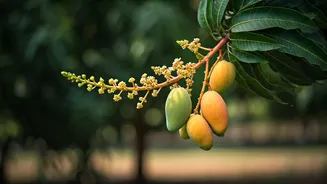
of India's beloved mango. Initially cultivating traditional crops like rice and wheat, Suman transitioned to floriculture in 1995 due to fluctuating market prices, experimenting with roses, mogra, and thuja. His early success in creating rose plants with multiple colors on a single stem sparked an ambitious idea: if he could innovate with flowers, why not with mangoes? This curiosity led him to acquire mango saplings of various types, meticulously grafting them onto rootstock. His dedication paid off when he observed a remarkable tree that consistently flowered three times a year, typically in January-February, June-July, and September-October, laying the groundwork for his future legendary creation.
Birth of Sadabahar
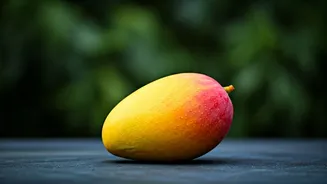
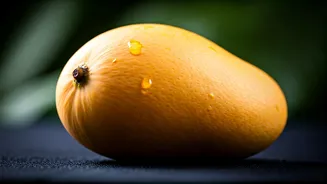
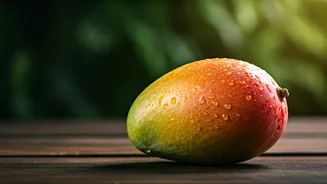
Around the year 2000, Shri Kishan Suman successfully cultivated his unique mango variety, christened 'Sadabahar'. This particular strain is characterized by its dwarf nature and remarkable disease resistance. In terms of taste, texture, and appearance, it bears a striking resemblance to the popular Alphonso mango, boasting a saffron-orange hue and a smooth, fiber-free flesh. What sets Sadabahar apart from other multi-fruiting varieties like Baramasi or Dofasli is its exceptional table quality. The news of Suman's achievement spread through agricultural networks, eventually reaching the National Innovation Foundation (NIF) via Honey Bee Network volunteer Sundaram Verma. Following NIF's guidance, Suman refrained from distributing the saplings for an extensive period of 11 years, allowing the NIF to conduct thorough nationwide testing of the Sadabahar variety.
National Recognition
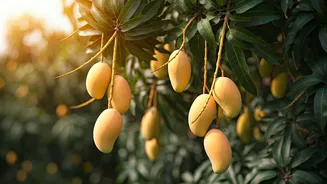
The innovative 'Sadabahar' mango, developed by Shri Kishan Suman, has achieved significant national recognition for its unique ability to produce fruit three times annually. This remarkable development was formally acknowledged when Suman received the prestigious Farm Innovation Award at Rashtrapati Bhavan in March 2017, during the National Innovation Foundation's 9th Biennial Grassroots event. The 'Sadabahar' mango trees are now cultivated even within the Amrit Udyan at Rashtrapati Bhavan. Furthermore, the variety has been officially registered under the Protection of Plant Varieties and Farmers’ Rights Act, cementing its status as a unique and protected agricultural innovation. While traditional mango trees take approximately five years to begin bearing fruit, the exceptional qualities and consistent yields of Sadabahar make the cultivation process a worthwhile endeavor for growers across the country, promising a more continuous supply of this prized fruit.