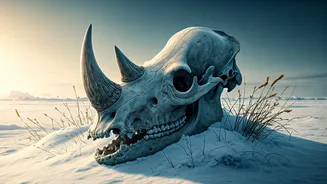

An Ancient Find
The discovery of a 23-million-year-old 'Arctic rhino' in Canada is a monumental event in paleontology. The fossil provides invaluable information about
the evolution of rhinoceroses and the ancient climate of the Arctic. The rhino, which existed during the Miocene epoch, offers a window into a time when the Earth's environment was markedly different. This discovery contributes significantly to our understanding of the planet's history and the adaptability of animal life. This remarkable find provides a clearer picture of how these creatures thrived in a much warmer Arctic, challenging previous assumptions about their habitat and behavior. It is a testament to the ongoing uncovering of the Earth’s hidden secrets.
Rhinos of Yore
This ancient rhino, unlike its modern counterparts, would have adapted to the conditions of the Arctic. Scientists speculate that this rhino had unique characteristics, such as thicker fur and perhaps a different body shape, to survive in colder climates. Further research into the fossil will offer insights into these adaptations. The study of the rhino's anatomy, including its bone structure and teeth, will give clues about its diet and lifestyle. These details paint a vivid picture of the rhino’s place in the ancient ecosystem. These discoveries emphasize the resilience of life and its ability to adapt, even in the harshest environments. The unearthed remains offer a wealth of information about how these animals thrived in a region that is now known for its cold, icy landscape.
Climate Clues Emerge
The rhino's fossil is not just about the animal; it's also a key to understanding the past climate of the Arctic. The presence of a rhino in the Arctic millions of years ago suggests a much warmer environment than what exists today. Analyzing the rhino's fossil alongside geological data can help researchers reconstruct the climate. This research offers valuable perspectives on past global warming and can potentially provide crucial data for climate models. The findings reveal the dynamic nature of Earth's climate and underscore the shifts that have taken place over millions of years. This discovery gives a clear indication of how the environment has transformed and the impact on the animals that inhabited the region. The study enhances our grasp of the planet's climate history.
Unveiling the Past
The excavation site in Canada has yielded extraordinary findings that expand our comprehension of prehistoric life. The recovery of the 'Arctic rhino' adds to a growing body of evidence about the history of the region. The fossil of this rhino gives a unique look at how species have evolved and adapted to thrive in unusual settings. These findings highlight the value of paleontological research and its ability to uncover long-lost chapters of Earth's history. The discovery is an invitation to explore the scientific field and the methods used to study the Earth's distant past. The study underscores how research can transform our understanding of the history of life on the planet. These findings further illustrate how animal species managed to thrive in changing environments, demonstrating nature's resilience.
Impact and Future
This recent discovery has a wide impact, contributing to an increased understanding of paleontology, climate science, and evolutionary biology. Future research will build upon the current findings, potentially leading to more discoveries. The research will explore the rhino's genetic makeup and compare it with other rhino species. This research also helps in learning how species respond to changing environmental conditions. The ongoing studies are critical for comprehending the effects of climate change and how ecosystems adapt. These findings offer an unparalleled opportunity to learn about our planet's past.