






Urban Beekeeper's Dual Life
Rajendran Tamilarasan, an IT professional in Chennai, balances his demanding tech career with a deep-seated passion for beekeeping, a pursuit inspired
by childhood memories of honey collection. He operates T R Bees and Apiary from Madambakkam, managing bee colonies in urban backyards. His initiative, initially an educational effort to highlight bees' role in pollination and biodiversity, has evolved significantly. Public awareness has shifted from pest control to bee rescue, with Rajendran frequently relocating large hives from buildings to safer, greener areas. He also educates residents on hive maintenance and safe bee handling. Rajendran notes that Chennai's diverse urban flora, with different homes featuring various flowering trees and plants, provides a consistent and varied food source for bees throughout the year, debunking the notion that cities are inhospitable to pollinators.
Campus Bee Sanctuaries
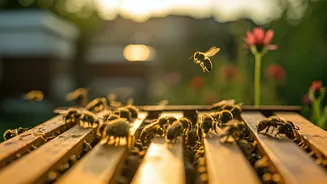
K. Vasanthakumar, who relocated to Chennai from his farming village due to rainfall issues, observed the potential for bees even in the city's developed areas, noticing abundant flowering plants. His conviction solidified in 2006 when a bee box yielded a substantial three kilograms of honey in just one month. This success prompted him to move his beekeeping operations permanently to Chennai. Now running Amudha Bee Farm from Kolathur, he employs traditional methods learned from his grandfather. Vasanthakumar establishes colonies in residential complexes, the Guindy horticulture center, and the KVIC campus, carefully selecting quiet spots insulated from urban stressors like traffic and heat. His process involves setting up wooden boxes with existing colonies. As populations grow, he partitions colonies, allowing new ones to form naturally. He also produces beeswax-based skincare products, emphasizing their natural benefits. Vasanthakumar acknowledges that public fear of stings persists, but stresses bees are docile unless threatened, with weather posing a more significant challenge to colony health.
Wild Hive Stewardship
M. Sreedhar, a resident of Chromepet, offers a unique perspective on bee interaction by providing a sanctuary for wild bee colonies in his backyard neem tree each summer. For seven years, these bees have returned to the same tree, constructing large suspended hives for several months before dispersing. Sreedhar practices a hands-off approach, refraining from honey harvesting or hive interference, allowing the bees to thrive and depart on their own terms. He has observed that the bees' return is linked to the environmentally conscious approach his family has taken, planting numerous native trees that create a supportive ecosystem. This nurturing environment, free from excessive noise, disturbance, and harsh sunlight, is crucial for these specific bee colonies. The neighborhood has adapted, even dimming exterior lights at night to prevent disorientation and heat-related deaths among the bees, demonstrating a harmonious coexistence.