






Record-Shattering Speed
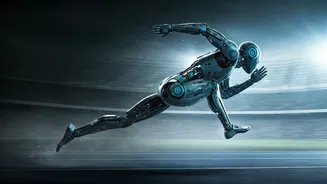
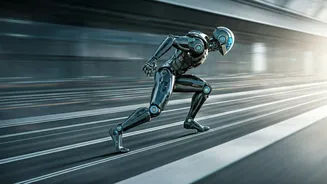
A remarkable milestone has been achieved in robotics, with a humanoid machine now capable of sprinting at an astonishing 10 meters per second. This speed
not only sets a new world record for humanoid robots but also brings these artificial beings tantalizingly close to the average pace of Olympic legend Usain Bolt during his iconic 100-meter dash. Recent demonstrations showcased the robot navigating an athletic track with impressive stability and balance, capturing the attention of the tech world. The implications of such speed in a machine designed with a human-like physique are profound, suggesting a future where robots can perform physically demanding tasks at unprecedented velocities. This leap in agility represents a significant stride towards robots that can operate more dynamically and efficiently in various environments, mirroring and potentially exceeding human capabilities.
Engineering for Agility
The development behind this rapid humanoid robot is rooted in sophisticated engineering and advanced component integration. The robot in question boasts a leg length of 80 centimeters and a weight of approximately 62 kilograms, placing its physical dimensions within the range of an average human. This careful calibration of size and mass is crucial for achieving high speeds while maintaining stability. The underlying technology relies on advanced powertrain systems and high-torque joint motors, which are essential for executing rapid and precise movements. Furthermore, integrated perception systems, including depth cameras and 3D LiDAR sensors, enable the robot to navigate its surroundings effectively, ensuring smooth and controlled locomotion even at peak velocities. This combination of mechanical prowess and intelligent sensing is key to its record-breaking performance.
Beyond Human Records
The trajectory of humanoid robot development suggests an ambitious future where these machines could surpass human athletic achievements. Experts anticipate that within the next few years, humanoid robots may indeed break Usain Bolt's 100-meter dash record. This projection is fueled by continuous innovation in robotics, aiming to equip machines with not only speed but also enhanced dexterity and computational power. The progress seen in areas like autonomous kung fu showcases and the development of robots capable of playing basketball highlights the expanding versatility of these machines. As robotics companies invest heavily in research and development, the capabilities of humanoid robots are rapidly evolving, blurring the lines between machine and human performance across various domains.
Global Robotics Race
The advancements in humanoid robotics are not confined to a single region; a global race is underway, with various entities pushing the boundaries of what's possible. Beyond the record-setting sprints, robots are demonstrating an array of sophisticated skills, from intricate martial arts performances to precision sports. Companies worldwide are contributing to this rapid evolution, with significant progress observed from both established tech giants and burgeoning startups. The development of robots that can perform complex physical tasks autonomously, such as intricate dance routines or even competitive racing, underscores the accelerating pace of innovation. This collective effort is rapidly transforming the landscape of robotics, paving the way for increasingly capable and versatile machines that could play a significant role in future society.