



A New Galactic Perspective
Witnessing our home planet from the profound isolation of deep space carries a remarkable weight. Earth appears almost ethereal, like a cherished memory
rather than the vibrant, living world it is. NASA's recent release of over 12,000 images from the Artemis II mission provides an unparalleled and comprehensive visual narrative of this extraordinary journey. Many of these photographs were not shared immediately after the mission, having only recently undergone processing and organization. For avid space enthusiasts, this unveiling is akin to discovering a long-lost treasure trove. For a broader audience, it presents a rare opportunity to see the cosmos through the eyes of astronauts on a historic voyage back to deep space.
Documenting Every Moment
Over the course of a 10-day expedition, spanning from April 1st to April 10th, four intrepid astronauts—Reid Wiseman, Victor Glover, Christina Koch, and Jeremy Hansen—circumnavigated the Moon aboard the Orion spacecraft. Throughout this incredible journey, each crew member diligently captured a multitude of moments. Their photographic efforts spanned the entire mission spectrum, from the powerful spectacle of launch to the serene return. The imagery encompasses the gradual receding of Earth into the distance, as well as dramatic close-up views of the Moon during the spacecraft's orbital flyby. It appears no opportunity was missed to document their experience, even during the more routine phases of their flight, creating a rich visual diary of their time in space.
Accessing the Image Archive
The complete compilation of over 12,000 images from the Artemis II mission is publicly accessible through NASA's dedicated online platform. This resource is open for anyone to explore without any access restrictions. Given the sheer magnitude of the collection, delving into every single photograph may require a considerable investment of time. Users might notice that the website's loading speed can occasionally be slow, likely a consequence of managing such an extensive volume of data. However, for those who embark on this visual exploration, the archive offers an incredibly diverse array of perspectives, ranging from meticulously composed shots to candid, spontaneous snapshots, all contributing to an authentic and compelling record of the mission.
Unique Photographic Significance
While NASA has a long history of releasing space imagery, the photographs from the Artemis II mission possess a distinct and special significance. This mission marked humanity's first endeavor to journey close to the Moon in nearly fifty years, since the groundbreaking Apollo program. Each image, therefore, carries the weight of this historical milestone, making them exceptionally unique and memorable. Furthermore, these photographs are notable for their human perspective; they were captured not by automated systems but by the crew members themselves, reflecting their direct visual experiences. Reports suggest that the collection includes intimate glimpses of the spacecraft's interior and everyday objects, alongside the awe-inspiring vistas of space itself.
Paving Future Lunar Paths
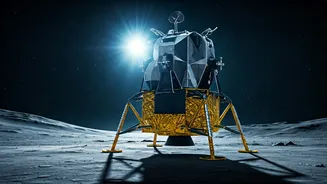
The fundamental objective of the Artemis II mission was not primarily for extensive exploration or Earth observation, but rather to serve as a crucial validation flight. This mission was a vital testbed, meticulously designed to pave the way for subsequent lunar expeditions. It is widely believed that the flight successfully met all its core objectives, thereby clearing the path for future endeavors, most notably Artemis III. This upcoming mission is slated for a crewed landing on the lunar surface and may involve collaborations with private aerospace entities such as SpaceX and Blue Origin, who are developing lunar lander capabilities. With these advancements, humanity is poised to revisit the Moon within the next few years, marking our first return since 1972.
Journey's Emotional Echoes
Observing the newly released photographs from the Artemis II mission offers profound insight into both the technical achievements and the deeply personal impact of the journey on the crew. These images eloquently convey the immense sense of distance, the profound solitude, and the overwhelming grandeur of space—feelings that words alone struggle to capture. They serve as powerful visual testament to the remarkable progress in space exploration and hint at the vast potential for future advancements. Currently, these photographs provide an invaluable glimpse into the human experience of venturing beyond our terrestrial home, offering a tangible connection to the cosmos.