





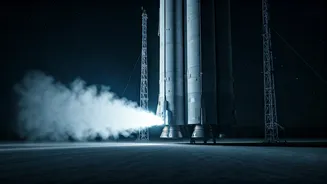
Closer Than You Think
The conventional focus on space exploration often centers on distant celestial bodies such as the Moon and Mars, which have captured imaginations for decades.
However, a compelling argument posits that the next significant space frontier is surprisingly close, merely 100 kilometers above the Earth's surface. This region, often referred to as the Kármán line, is considered the boundary between Earth's atmosphere and outer space. Reaching this altitude is significantly less challenging and expensive compared to journeys to the Moon or Mars, presenting a more accessible and economically viable option for space-based activities. The proximity of this area offers advantages in terms of reduced travel time, fuel consumption, and communication delays, making it an ideal location for a wide array of space-based operations.
Why This Region?
Several factors contribute to the compelling case for exploring and utilizing the space just 100 kilometers above Earth. The region presents a more immediate and manageable environment compared to the harsh conditions found on the Moon or Mars. This close proximity reduces the logistical complexities associated with missions, as well as the risks to astronauts and equipment. It also reduces the cost and time of missions, enabling more frequent and cost-effective space access. Furthermore, the region offers the potential for resource utilization, such as the extraction of valuable materials from asteroids that pass through this area, as well as opportunities for scientific research, particularly in the fields of atmospheric science and space debris tracking. It serves as a strategic location for deploying satellites and space-based infrastructure, offering a unique vantage point for observing Earth and monitoring space weather.
Scientific Opportunities Abound
The space situated 100 kilometers from Earth offers a fertile ground for scientific exploration. Scientists can use this area to study the upper atmosphere, monitor space weather, and analyze the interaction between the Earth's atmosphere and the solar wind. Research conducted in this region can yield valuable insights into climate change, weather patterns, and the impact of space environment on Earth-based technologies. The development of advanced sensors and instruments deployed in this area can enhance our ability to detect and track space debris, mitigating the risks posed by collisions and ensuring the sustainability of space activities. Moreover, the proximity to Earth facilitates experiments related to the effects of long-duration exposure to space conditions, offering valuable data for astronautical health and safety.
Resource Utilization Potential
The region approximately 100 kilometers above Earth holds considerable promise for resource utilization. The proximity to our planet opens possibilities for mining and processing resources from asteroids and other space objects that traverse this area. This reduces the logistical challenges associated with transporting materials from distant locations. Space-based manufacturing using microgravity environments could lead to the production of specialized materials, such as advanced alloys and pharmaceuticals. The availability of raw materials from near-Earth objects could also support the construction of large-scale space infrastructure, including space stations and solar power plants, ultimately driving the growth of a space-based economy. These activities could have profound economic benefits and stimulate innovation across various sectors, creating new opportunities for sustainable growth.
Strategic Advantages Unveiled
Deploying satellites and other space-based infrastructure in the area 100 kilometers above Earth offers strategic advantages. The lower orbit reduces communication latency and improves data transfer rates compared to higher orbits, making it ideal for a wide range of applications, including telecommunications, Earth observation, and navigation. The proximity to Earth reduces the risks and costs associated with launching and maintaining satellites. This strategic advantage enables better monitoring of terrestrial activities and strengthens national security capabilities. Developing a robust presence in this region supports advancements in space technology, promotes innovation, and fosters international collaboration in the pursuit of scientific and economic goals.