
A Stellar Spectacle
Stars, colossal spheres of incandescent plasma, are constantly undergoing a life cycle, marked by birth, evolution, and eventual death. The process is
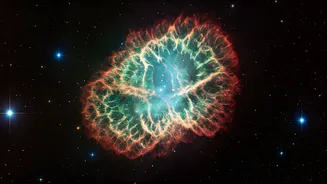
not always subtle; in some instances, it results in spectacular displays. Supernovae, for instance, are among the most energetic events in the cosmos, where massive stars end their lives in a blaze of glory. Observing these events allows us to understand the lifecycle of stars, their evolution, and their influence on the universe. The Crab Nebula provides an excellent example. Born from the supernova explosion of a star that occurred in 1054 AD, it continues to expand, giving off energy that has captivated astronomers for centuries. Its filaments and glowing remnants tell stories of destruction and creation, showing how stars can transform into beautiful and complex structures after their demise. Telescopes provide insights into the stages of stellar life and death.
Betelgeuse's Fate Unveiled
Betelgeuse, a red supergiant star in the constellation Orion, has long held a fascination for astronomers. Its peculiar behavior, including dimming over the years, has prompted speculation about its future. While it has not yet exploded, the star has shown behaviors that suggest its transition toward the end stages of its life. Astronomers have diligently observed Betelgeuse. The star is nearing the end of its life, but the exact timing of its supernova remains uncertain. When it does explode, the event will likely be visible from Earth, a sight that astronomers eagerly anticipate. Betelgeuse's story emphasizes the transient nature of stars, highlighting that even the brightest celestial beacons eventually fade, leaving behind remnants that shape the universe. Its study provides insights into the processes which dictate a star's ultimate fate.
The Crab Nebula's Legacy
The Crab Nebula is one of the most studied and visually stunning remnants of a supernova. It represents the aftermath of a massive star's death, offering researchers a detailed opportunity to study the effects of these powerful events. Its intricate structure, a web of filaments of gas and dust, expands outward from the site of the original explosion. The nebula contains the remains of the core of the star, a rapidly spinning neutron star. This pulsar emits powerful jets of radiation and winds that energize the surrounding nebula. Studying the Crab Nebula provides clues about the elements that stars synthesize during their lives and release into space. The nebula's ongoing evolution serves as a model for understanding how stellar remnants interact with their surroundings, contributing to the cycle of creation and destruction in the cosmos.
Telescopes' Key Role
Modern telescopes play a crucial role in studying both Betelgeuse and the Crab Nebula, revealing details that were previously unknown. Instruments across the electromagnetic spectrum, from radio waves to X-rays, provide unique perspectives on these celestial objects. These tools allow astronomers to observe the characteristics and evolution of these celestial objects. By using these tools, researchers can study everything from the distribution of elements in the Crab Nebula to the surface changes on Betelgeuse. The collected data is then used to construct detailed models and improve understanding of the stellar phenomena. Advancements in telescope technology and analytical methods are constantly providing new insights into the life and death of stars.