






Corpse Flower's Foul Odor
The *Amorphophallus titanum*, or corpse flower, is infamous for its overpowering stench, a key element of its survival strategy. The smell, which has been
likened to rotting flesh, attracts carrion beetles and other pollinators that are crucial for its reproduction. Native to Sumatra, Indonesia, this giant bloom, which can reach heights of over 10 feet, is a spectacle to behold. Its putrid smell is essential for attracting the insects it needs for pollination. The flower's rare blooming cycle, which can take years between flowering events, adds to its mystique. When it finally blooms, the spectacle, both visually and olfactorily, is quite unforgettable for those who have the chance to experience it. The plant's structure includes a large spadix, which is the central column, surrounded by a frilly spathe. The spathe's reddish-brown hue further mimics the appearance of decaying meat, amplifying the effectiveness of its scent.
Stinking Corpse Lily's Scent
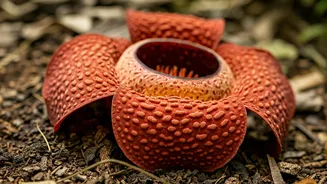
The *Rafflesia arnoldii*, commonly called the corpse flower, also has a powerfully unpleasant smell, though it is not the same species as the *Amorphophallus titanum*. Found in the rainforests of Southeast Asia, this parasitic plant produces the world’s largest single flower, often exceeding three feet in diameter. Its putrid smell mimics the aroma of a decaying animal, drawing in carrion flies for pollination. The Rafflesia lacks stems, leaves, or roots, instead of living as a parasite inside the Tetrastigma vine. The flower blooms for only a few days, making it an extremely rare and valuable sight. The reddish-brown color and fleshy texture of the petals further enhance the visual deception, making it even more alluring to its insect pollinators. The plant’s survival depends entirely on this fleeting and foul-smelling event.
Durian-Scented Flowers
Certain flowers possess a scent that resembles the pungent aroma of durian fruit. While the durian fruit itself is famous for its powerful odor, some flowers have evolved a similar scent profile to attract specific pollinators. The exact species that exhibit this characteristic can vary, but these flowers often share the common trait of producing volatile organic compounds that mimic the durian's distinctive and sometimes polarizing fragrance. The pollination strategies of these flowers are closely tied to the pollinators that are also attracted to the durian fruit, creating a symbiotic relationship. These flowers might not be as overtly offensive as the corpse flower, but their durian-like scent can be equally memorable. These scents are a complex blend of sulfurous and fruity compounds.
Skunk Cabbage's Aroma
The skunk cabbage, *Symplocarpus foetidus*, is named for the strong odor it emits, which resembles the scent of a skunk. The plant utilizes its foul smell to attract scavenging insects that help it with pollination. These flowers are native to wetlands and swamps in North America and Asia. The skunk cabbage begins blooming early in the spring, sometimes even breaking through the snow, due to its ability to generate its own heat. The unique smell is produced by the plant's spadix, which is protected by a mottled, purple-brown spathe. The flower’s smell is most intense during pollination, attracting flies and beetles. The heat generated by the plant not only helps it to melt snow but also further intensifies its aroma. This survival mechanism guarantees that it can effectively attract pollinators, and thrive in its unique habitat.
Carrion Flowers' Tactics
Carrion flowers encompass a group of flowering plants, often from the *Stapelia* genus, that are known for their ability to lure pollinators via their deceptive smells. Mimicking the odor of decaying flesh, these plants attract flies that lay their eggs in the blossoms, subsequently pollinating them. Their appearance often complements the smell, with reddish-brown hues and fleshy textures that resemble rotting meat. The carrion flowers thrive in dry, arid regions, where they have evolved to survive in harsh conditions. These flowers have developed a variety of adaptations, ranging from their specific scents to their pollination strategies, all of which contribute to their survival. Though the odors are quite unpleasant for humans, the carrion flowers have secured their role in the ecosystem through their unique olfactory techniques and effective pollination methods.