





The Unsettling Realism
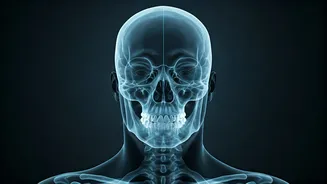
Cutting-edge artificial intelligence has advanced to a point where it can generate medical images, specifically X-rays, that are remarkably lifelike. Recent
research published in the esteemed journal *Radiology* indicates that these AI-produced "deepfake" X-rays are so sophisticated that they can successfully deceive highly trained radiologists. This phenomenon doesn't just challenge the perception of medical imaging; it also presents a substantial threat to the reliability of healthcare systems globally. The study's outcomes underscore the immediate need for enhanced methods to detect these fabricated images and specialized training programs to safeguard the integrity of patient records. The implications range from potential legal ramifications, where a fake injury might be presented as evidence, to severe cybersecurity risks, such as malicious actors manipulating diagnoses by introducing synthetic images into hospital networks, leading to widespread diagnostic chaos and undermining the very foundation of digital medical data.
Global Detection Challenges
A comprehensive study involving 17 radiologists from 12 different medical institutions across six countries – the United States, France, Germany, Turkey, the United Kingdom, and the United Arab Emirates – investigated the detectability of AI-generated X-rays. Participants, with experience levels varying from novices to professionals with up to 40 years in the field, examined a total of 264 X-ray images, equally divided between authentic scans and those created by AI. The researchers divided the images into two distinct sets for review. The first set comprised a mixture of genuine X-rays and images generated by ChatGPT across various anatomical regions. The second set concentrated specifically on chest X-rays, again featuring an even split between real images and those produced by RoentGen, an open-source AI diffusion model developed by Stanford Medicine researchers. This global and diverse participant pool aimed to provide a robust assessment of detection capabilities.
Accuracy Rates Revealed
When radiologists were initially unaware of the presence of fake images, their ability to correctly identify AI-generated X-rays was limited, with an average accuracy of just 41%. However, upon being informed that synthetic images were included in the review, their accuracy rate improved significantly to 75%. This improvement highlights the psychological impact of expectation on diagnostic performance. The variability in detection was quite pronounced; some radiologists correctly identified as few as 58% of the AI images, while others reached an impressive 92%. Advanced AI models also faced challenges, with four multimodal large language models (LLMs) – GPT-4o, GPT-5, Gemini 2.5 Pro, and Llama 4 Maverick – achieving accuracy scores between 57% and 85%. Even ChatGPT-4o, which was involved in generating some of the deepfake images, did not identify all of them, though it did outperform the other AI models. For chest X-rays specifically generated by RoentGen, human radiologists' accuracy ranged from 62% to 78%, while AI models performed between 52% and 89%. Interestingly, extensive professional experience did not correlate with better detection, though musculoskeletal radiologists demonstrated a slight advantage over other subspecialties.
Subtle Signs of AI
Despite the overall difficulty in distinguishing between real and AI-generated X-rays, researchers identified certain subtle visual patterns that often characterize synthetic images. These AI-created images tend to exhibit an almost unnatural perfection. For instance, bones may appear excessively smooth, the spine unnaturally straight, and lung structures overly symmetrical. Blood vessel patterns might display an unusual uniformity, and fractures, when present, can appear exceptionally clean and consistent, often confined to a single side of the bone. These "too perfect" characteristics, while difficult for the untrained eye to pinpoint, can be telltale signs for those looking closely. Recognizing these subtle deviations is crucial for developing more effective detection methods and ensuring the integrity of medical diagnostics in an era increasingly influenced by artificial intelligence.
Risks and Future Safeguards
The alarming realism of AI-generated X-rays presents profound concerns regarding their potential misuse. Experts caution that these fabricated images could be exploited in fraudulent legal cases or introduced into critical hospital systems to deliberately influence diagnoses. To combat these escalating risks, the researchers propose the implementation of robust digital safeguards. These suggested measures include the embedding of invisible watermarks directly within images, making them difficult to tamper with or forge. Additionally, the use of cryptographic signatures linked to the specific technician who captured the scan could provide a verifiable trail, enhancing authenticity. The study also emphasizes the critical need for ongoing research and development into sophisticated detection tools and comprehensive training programs for medical professionals to stay ahead of the evolving capabilities of AI in creating deceptive medical imagery.