





Beyond the Plaque Theory
For decades, the scientific community has largely attributed Alzheimer's disease to the accumulation of amyloid-beta plaques outside of brain cells. This
theory gained traction due to the presence of these sticky protein clusters in affected individuals and the fact that genetic mutations leading to early-onset Alzheimer's often increase amyloid-beta levels. However, a significant number of clinical trials aimed at clearing these plaques have yielded disappointing results, failing to halt or reverse the disease's progression. This lack of success has prompted researchers to explore alternative hypotheses, acknowledging that the established model might be incomplete or even misdirected. The complexity of Alzheimer's, which also involves tau protein tangles, has led to a situation where many research efforts concentrate on only one of these key players, potentially overlooking crucial interactions. This new wave of investigation suggests that the root cause might lie in a more intricate cellular process than previously understood, moving beyond a simple aggregation model to an intracellular functional disruption.
Intracellular Protein Conflict
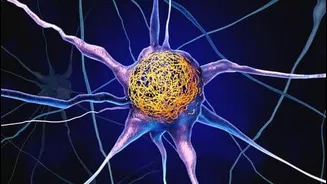
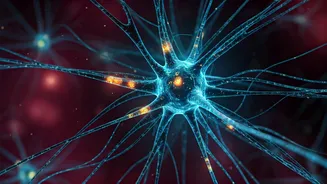
This latest research challenges the amyloid plaque hypothesis by proposing that Alzheimer's originates from a direct conflict between two critical proteins within neurons: amyloid-beta and tau. While tau's role in stabilizing microtubules—essential internal roadways for molecule transport in nerve cells—is well-established, the study reveals a surprising competition for binding sites on these structures. Scientists discovered that specific segments of tau, crucial for attaching to microtubules, bear a striking resemblance in size and shape to amyloid-beta. Through experiments involving fluorescently tagged amyloid-beta, researchers observed that this protein binds to microtubules with comparable strength to tau. Consequently, when amyloid-beta levels rise inside neurons, it can dislodge tau from its rightful place. This displacement initiates a cascade of problems: the cell's internal transport system falters, and tau begins to aggregate abnormally in unintended cellular locations, potentially leading to neuronal dysfunction and death.
Rethinking Disease Origins
The implications of this protein competition theory are profound, suggesting that the visible hallmarks of Alzheimer's—amyloid plaques and tau tangles—might be consequences rather than primary causes of the disease. If amyloid-beta's initial disruption occurs within the neuron by interfering with tau and microtubules, then the extracellular plaques might be a secondary phenomenon. This perspective could elegantly explain why interventions targeting only extracellular plaques have fallen short; they fail to address the core intracellular damage. Furthermore, this model aligns with observations about aging, where the brain's protein clearance mechanisms, like autophagy, naturally decline. As cells become less efficient at recycling proteins, amyloid-beta can accumulate intracellularly, intensifying its competition with tau. This provides a unifying framework, connecting disparate findings and offering a more holistic understanding of the disease's pathogenesis.
New Avenues for Treatment
If this new understanding of Alzheimer's holds true, it necessitates a paradigm shift in therapeutic strategies. Rather than solely focusing on the laborious task of removing protein clumps, future treatments could target the initial molecular clash within neurons. Potential interventions might aim to prevent amyloid-beta from binding to microtubules, thereby preserving tau's function and the integrity of the cell's transport system. Alternatively, therapies could focus on bolstering the cell's natural ability to clear amyloid-beta, preventing its harmful accumulation. The stabilizing effect of compounds like lithium on microtubules, observed in other research, further supports the idea that strengthening these cellular structures could mitigate amyloid-beta's damaging effects. This research offers a unified theory that reconciles previously disconnected observations, paving the way for more targeted and potentially effective interventions against this debilitating neurodegenerative disease.