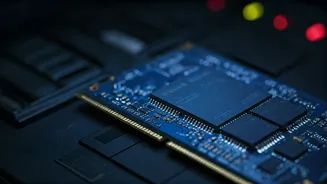

AI's Memory Craving
Artificial intelligence is rapidly becoming an integral aspect of many technologies, drastically increasing the need for memory chips. The requirements
of AI, particularly in areas like data processing and machine learning, necessitate high-performance computing capabilities. Memory chips, essential components for storing and accessing large volumes of data, are consequently experiencing a surge in demand. This trend affects not only conventional devices, such as smartphones and laptops, but also sophisticated applications such as AI-driven data centers and sophisticated gadgets. The rising importance of these chips is thus reshaping the market, prompting businesses to create and enhance production in order to meet rising demand, which is, in turn, influencing financial decisions and business strategies.
Market Dynamics Evolve
The increased demand for memory chips has notable implications for consumer electronics. As AI applications become more sophisticated, the consumer electronics industry must adapt to incorporate these advanced technologies. The rising costs of memory chips, a direct outcome of this increased demand, affect the overall production costs of consumer gadgets. This financial pressure can result in higher end prices or a decrease in production margins for manufacturers. Also, the emphasis is shifting towards optimizing chip performance and efficiency to accommodate the increasing computing demands of AI. This situation results in a cycle of innovation, prompting businesses to look for ways to boost memory capacity and processing efficiency while mitigating cost issues, and influencing the future structure of the market.
Space-Based Data Centers
In an interesting strategic shift, some businesses are exploring the idea of data centers in space. The vision involves using orbital facilities to house AI computing resources, which are powered by solar energy and equipped with sophisticated processing units. For example, Google's 'Project Suncatcher' is an example of research in this field, aiming to link solar-powered satellites into an AI cloud. The core purpose is to maximize AI efficiency, minimize latency, and minimize the reliance on earthbound infrastructure. This approach has many potential benefits, including enhanced data processing capabilities and improved data security. However, it also presents technological challenges in terms of managing infrastructure, power generation, and data transmission over vast distances. Despite the hurdles, these efforts reflect the continued evolution of AI-driven technology.
Chip Manufacturing Advances
Major tech companies are actively developing new AI chips in order to enhance performance and take a competitive edge. These advancements are critical for meeting the ever-increasing requirements of AI applications. Microsoft, for example, has unveiled the next generation of AI chips to contend with industry leaders. Such initiatives drive innovation in chip design, manufacturing processes, and software optimization. The development of AI-specific chips aims to enhance computing speed and efficiency while also addressing energy consumption concerns. This innovation race promotes competitive dynamics, as businesses strive to release better, faster, and more efficient chips to serve the growing AI market. This continuous innovation will play a crucial role in enabling future advancements in artificial intelligence and related fields.