






Unveiling Dark Matter
Dark matter, although unseen, is a crucial component of the cosmos, exerting gravitational influence on galaxies. Its presence is inferred by observing
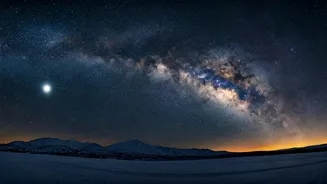
the motions of stars, galaxies, and the behavior of light. Determining the distribution of dark matter is key to comprehending the formation and evolution of galaxies like our Milky Way. Traditional methods, though useful, are limited in their scope. This new technique using runaway stars offers an innovative approach, providing finer details about the unseen matter throughout the galaxy. By tracing the paths of these high-velocity stars, astronomers can build a detailed map of dark matter’s presence, advancing our understanding of galactic structure and dynamics. These stars, ejected from their stellar clusters, act like cosmic tracers, revealing the hidden mass that shapes the galaxy.
Runaway Stars' Trajectory
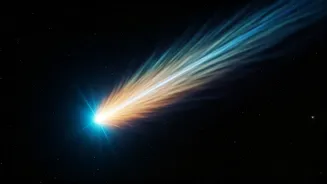
Runaway stars, propelled to high speeds by interactions within binary or multiple-star systems or supernova explosions, provide an unconventional perspective on dark matter. Their trajectories deviate from standard stellar movements, providing astronomers with unique opportunities to gauge the gravitational effects of dark matter. As these stars travel across the galaxy, their paths are affected by the distribution of mass, including both visible and dark matter. By meticulously analyzing the deviations in their trajectories, researchers can infer the underlying presence of dark matter. This approach is similar to how we might deduce the presence of unseen objects by watching the ripples they create on a pond's surface. Observing where the runaway stars are, and how their paths bend, offers clues to the distribution of dark matter and its role in shaping galactic structures. Analyzing the dynamics of these stars helps create a more detailed picture of our galaxy’s dark matter landscape.
Mapping Dark Matter
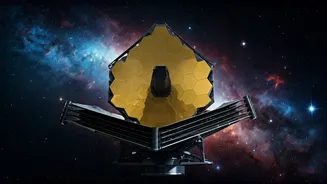
The process of using runaway stars to map dark matter involves several key steps. First, astronomers identify and track these high-velocity stars, measuring their positions, velocities, and the direction in which they travel. Advanced telescopes and sophisticated data analysis techniques are essential for accurate measurements. Then, they use these stellar data to compare the observed paths of the stars with theoretical models of galactic motion. The models account for the gravitational influence of visible matter, such as stars and gas, and, importantly, dark matter. Discrepancies between the observed star paths and the model predictions indicate the presence of dark matter. By refining the model and iteratively accounting for dark matter distribution, researchers can generate a map that visualizes the density and the location of this hidden matter throughout the galaxy. This method provides an increasingly detailed map, making it possible to better visualize the structure of the Milky Way.
Challenges and Innovations
This novel method presents astronomers with multiple challenges, including the need for highly precise measurements of star positions and velocities, which demands advanced instrumentation and careful data handling. Furthermore, accurately modeling the complex dynamics within a galaxy requires sophisticated computational tools and a deep understanding of astrophysics. The technique also depends on the accurate identification of runaway stars, as not all high-velocity stars are necessarily ejected from their parent systems. Despite these challenges, the use of runaway stars is a significant advancement in dark matter research. It provides a means to map dark matter in greater detail and in different regions of the galaxy. This approach could lead to new discoveries about the structure and the formation of galaxies. Continued advancements in telescope technology and computational capabilities will further refine this methodology, providing more accurate and comprehensive maps of dark matter, and deepening our understanding of the universe.
Future Research Directions
As the method of using runaway stars to map dark matter progresses, future research will likely delve into more specific areas. Astronomers aim to gather even larger datasets of runaway stars to refine the dark matter maps. Improving the accuracy of these maps will lead to a better comprehension of the structure and evolution of the Milky Way. Researchers also intend to integrate the runaway star method with other dark matter mapping techniques. This integrated approach, which combines data from different methods, such as gravitational lensing and the study of galactic rotation curves, will offer a comprehensive understanding of dark matter distribution. Further research will concentrate on exploring the correlation between dark matter distribution and the formation and evolution of different galactic components, like spiral arms, and the central black hole. This multi-faceted approach will bring deeper insights into the nature of dark matter and its influence on the cosmos.