
Early Universe Mysteries
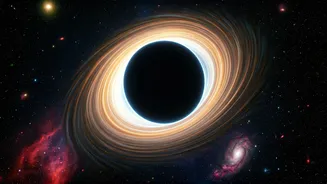
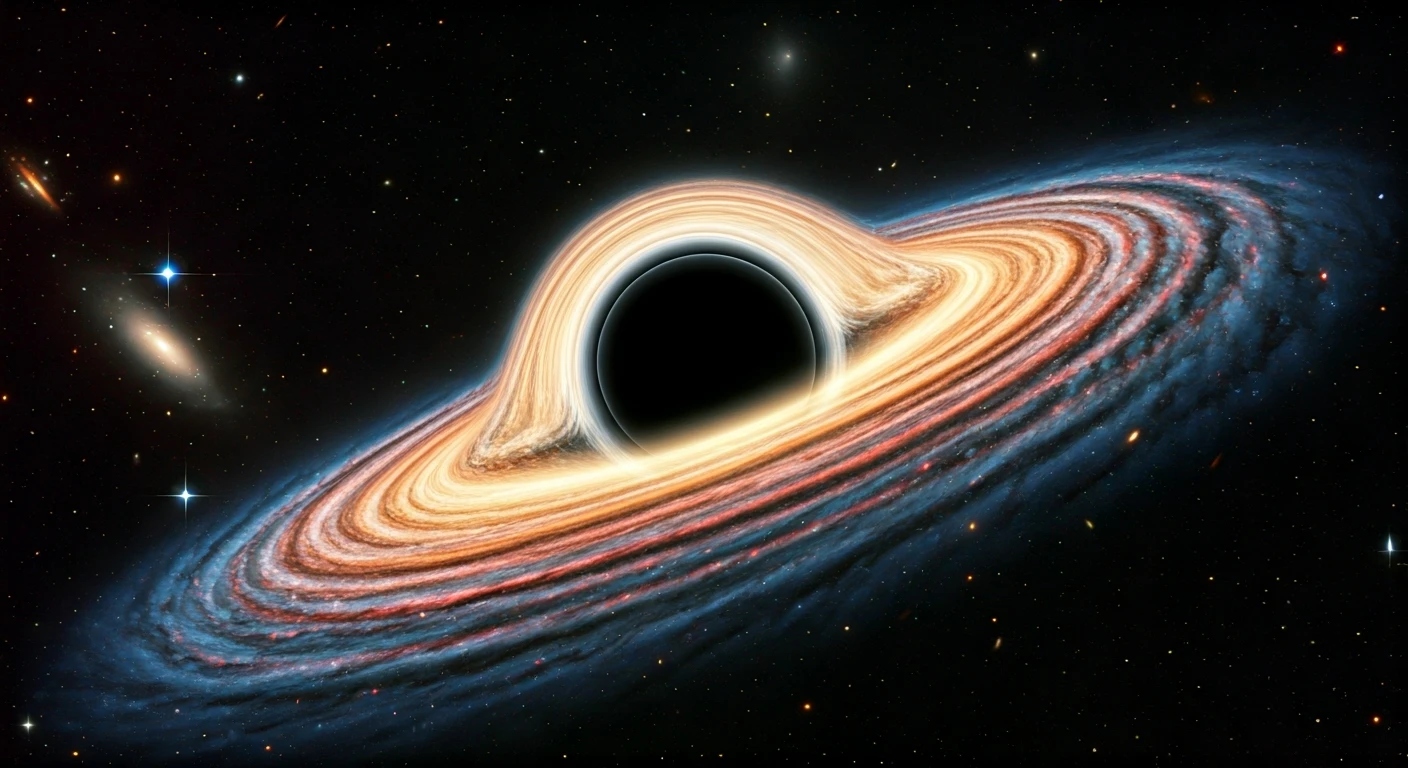
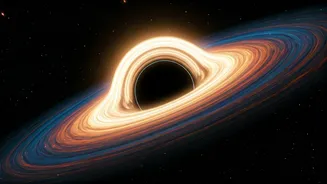
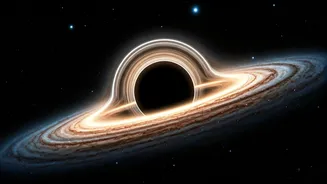
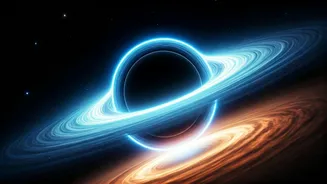
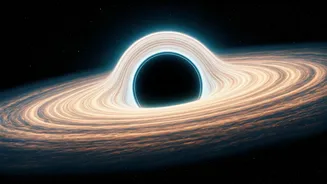
The early universe holds secrets that scientists are eager to unlock. One of the biggest puzzles involves the presence of supermassive black holes (SMBHs)
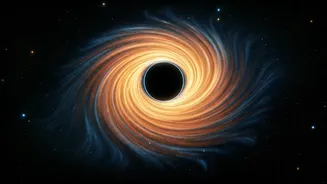
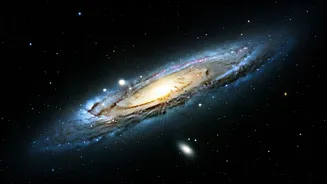
so early in cosmic history. These celestial titans, millions or even billions of times the mass of our Sun, exist at the centers of nearly all large galaxies, including our own Milky Way. But how did these behemoths come to be so quickly after the Big Bang? The standard models of black hole growth struggle to explain their rapid formation. Traditionally, it was thought that SMBHs originated from the collapse of massive stars, but this process alone can't fully account for the observed early SMBHs. JWST is changing everything, bringing us fresh data and insights into the environments where these SMBHs first appeared. The telescope's advanced capabilities enable astronomers to see farther into space and, therefore, further back in time than ever before. This helps them study galaxies and black holes in their infancy.
JWST's Revealing Gaze
JWST's exceptional infrared sensitivity is crucial for peering through the dust and gas that obscure distant galaxies. Because the light from the early universe has been stretched by the expansion of space, it shifts into the infrared spectrum, which JWST is designed to detect. By analyzing the light, astronomers can identify the signatures of SMBHs and the galaxies that host them. JWST's instruments are equipped to detect the light emitted by actively feeding black holes, also known as quasars. Quasars are incredibly bright objects that are powered by the accretion of material onto a black hole. JWST can examine the light from these quasars to determine the mass of the black hole, the rate at which it is growing, and the properties of the surrounding galaxy. The telescope also allows scientists to see the environments where SMBHs formed. These are often in regions with high concentrations of dark matter, the mysterious substance that makes up a significant portion of the universe's mass. This can also happen in galaxies undergoing intense star formation. JWST can observe these processes and provide crucial clues about how SMBHs arise and grow in the early universe.
Formation Theories Explored
JWST's data is challenging existing theories and inspiring new ones regarding SMBH formation. One idea suggests that SMBHs might have formed from the direct collapse of massive gas clouds. In this scenario, gigantic clouds of gas collapse directly into black holes without going through the intermediate stage of forming a star. Another theory proposes that SMBHs could have grown from seed black holes formed by the remnants of the first generation of stars. These seed black holes would have then rapidly grown by accreting surrounding matter. JWST's detailed observations of the early universe are helping to determine which of these models is most accurate. The telescope has the capability to observe the conditions that fostered the formation of early black holes. By measuring the distribution of elements, and the density of gas in different areas, JWST is providing evidence to back up particular formation scenarios. These observations can also distinguish between different models of black hole growth, testing ideas about how they feed on matter, and how this relates to their mass. Ultimately, JWST aims to provide a complete and more accurate picture of the universe.
Impact on Cosmic Models
The findings from JWST are reshaping our understanding of galaxy evolution. SMBHs play a pivotal role in the evolution of galaxies. The energy released by SMBHs, through processes like quasars and jets, can influence the rate of star formation within the host galaxy. Understanding how SMBHs and galaxies co-evolve requires knowing how these black holes came to be, and their growth patterns in the initial stages of cosmic history. JWST observations of SMBHs can help us to test and refine models of galaxy formation and evolution. This includes looking at the connection between the black hole's mass and the mass of its host galaxy. The data will also improve models that try to explain the distribution of galaxies throughout the universe. Moreover, the JWST data on SMBHs can inform our knowledge of dark matter and dark energy, the mysterious components that dominate the universe's energy density. As our understanding of SMBHs grows, so does our comprehension of the structure and evolution of the universe at large. The telescope will continue to collect data and make discoveries, and each new observation adds another piece to the grand cosmic puzzle.