






The Bowing Bird
The shoebill stork, with its imposing, prehistoric appearance, exhibits a unique behavior that appears to signal calm intent: a slow, deliberate bow. While
this gesture might seem like simple politeness, it's part of a complex display used in courtship, territorial disputes, and social interactions, often accompanied by head-shaking and distinct bill-clattering. Intriguingly, humans have noted that mirroring this bowing motion can sometimes elicit a positive response, suggesting it effectively communicates a lack of threat and a willingness to engage peacefully.
Regurgitated Affection
For smaller species like parrots, affection is shown through a less refined, yet equally significant act: regurgitating partially digested food. While this might seem off-putting to us, it's a fundamental bonding behavior within many avian communities. This practice serves dual purposes in the wild: feeding young chicks and strengthening the pair bond between mates, thereby reinforcing social connections. When directed towards humans, it can signal a deep attachment, sometimes even a misdirected courtship gesture, highlighting the complex social intelligence of these birds.
Gifts from the Deep
Wild animals, much like some domesticated pets, engage in 'gift-giving'. Orcas, for instance, have been observed approaching humans while carrying prey—such as fish or other marine life—and releasing it nearby. Within their own social structures, this food sharing is crucial for strengthening pod bonds and teaching hunting skills to younger members. Researchers speculate that these interactions with humans might stem from curiosity or an extension of their innate social instincts, underscoring the sophisticated intelligence and social awareness of these apex predators.
The Cleaner's Dance
Survival for smaller creatures often depends on clear communication. The bluestreak cleaner wrasse has developed a fascinating method: a distinctive 'dance' to attract larger fish. This elaborate sequence of movements serves as an advertisement for their role as parasite removers, reassuring the larger fish that they are safe to approach for cleaning. This symbiotic relationship, where the wrasse gains sustenance and the client fish gets parasite removal, highlights a surprisingly advanced level of social awareness and cooperation, with client fish even remembering and avoiding wrasses that cheat.
Gentle Marine Hugs
Manatees, known for their docile nature, sometimes exhibit behaviors that resemble hugging, wrapping their flippers around divers or swimmers. While this might appear as an affectionate embrace, it's more accurately understood as a form of tactile exploration and communication, given their sensitivity to touch. These interactions are a way for them to understand their environment and connect with others. However, conservationists advise against encouraging such close contact, as it can inadvertently make these protected animals more vulnerable to threats like boat strikes.
Greeting Kisses
Prairie dogs engage in a behavior that strongly resembles human kissing, involving mouth-to-mouth contact and often tongue touching. This 'greeting kiss' is a vital social function within their colonies, enabling them to identify familiar individuals and distinguish them from intruders. This recognition system is critical for maintaining social order in large colonies. Interestingly, these seemingly friendly interactions can sometimes precede aggression if recognition fails, demonstrating the complex role this behavior plays in communication and social cohesion.
Scent-Based Nose Rubs
A behavior akin to the human 'Eskimo kiss' or 'kunik' can be observed in koalas, involving nose-to-nose contact and sniffing. Koalas possess a highly developed sense of smell, which they use not only for scent-marking but also for gathering information about conspecifics. This close-contact nose touching and sniffing is believed to be a form of scent-based communication, allowing them to exchange vital information about identity, reproductive status, and health, especially during non-stressful social encounters.
The Friendly Chuff
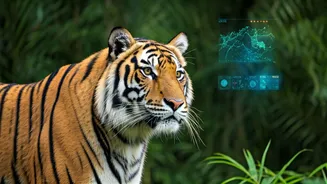
Big cats like tigers, leopards, and jaguars possess a unique vocalization, 'chuffing' or 'prusten,' which signifies a relaxed and friendly disposition. This soft, breathy exhale produced through the nose serves as a non-threatening greeting, typically directed towards familiar individuals, including mates, cubs, and even human caretakers. Unlike aggressive vocalizations like roars, chuffing conveys comfort and reassurance, playing a role in maternal care and courtship, and acting as a crucial signal of peaceful intent in formidable predators.
Joyful Popcorning
Guinea pigs and chinchillas express happiness and excitement through a behavior known as 'popcorning.' This involves sudden leaps, twists, and rapid changes in direction, reminiscent of popcorn kernels bursting. While appearing erratic, this energetic display is a clear indication of contentment and playfulness, commonly seen in younger animals but also exhibited by adults in stimulating environments. It's often accompanied by vocalizations, reinforcing its association with positive emotions and suggesting a widespread expression of joy across various small mammal species.
Dynamic Color Signals
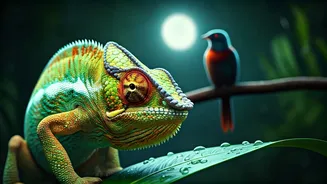
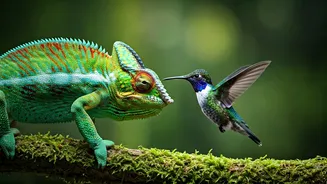
Chameleons' remarkable ability to change color is primarily a form of communication rather than camouflage, though that can be a secondary function. By manipulating specialized skin cells called chromatophores, they can express their mood, social status, and intentions. Muted colors often signal calmness, while vibrant hues like reds and blues can indicate aggression or mating readiness. This dynamic visual language also aids in thermoregulation, making color change a sophisticated tool for interaction with their environment and fellow chameleons.